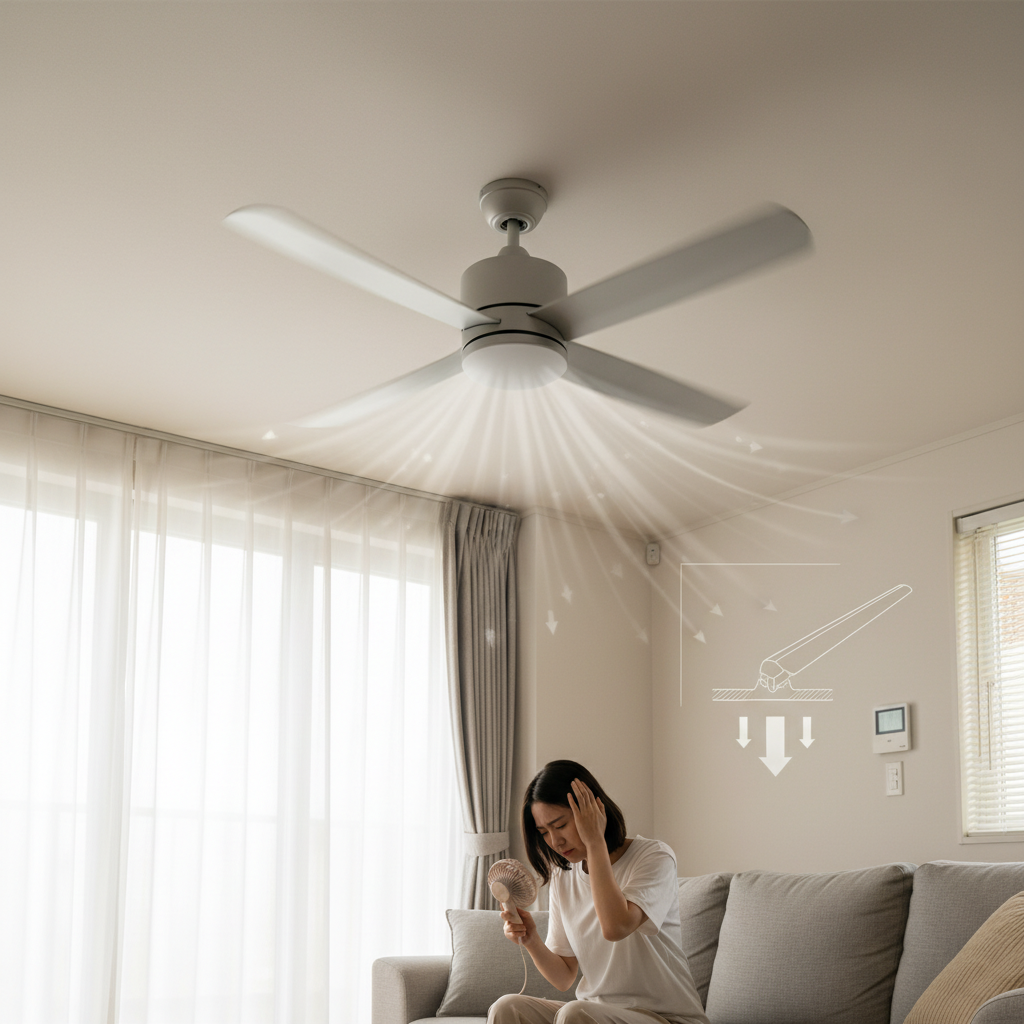
Picture this: your fan is whirring, blades spinning diligently, yet the room feels just as stuffy as before. That disappointing silence from a lack of breeze, despite all the mechanical effort, is a common frustration for many homeowners. While it’s easy to blame a weak motor or simply an old fan, often the true culprit behind your fan’s lackluster performance is a subtle yet critical factor: blade pitch.
This article delves into the often-overlooked world of fan blade pitch, explaining what it is, how it dictates the air your fan moves, and most importantly, how issues with this angle can turn your cooling companion into little more than a decorative spinning ornament. We’ll explore common pitch-related problems, guide you through diagnosing whether pitch is indeed the issue, and provide practical solutions to help restore that refreshing breeze your home deserves.
Understanding Fan Blade Pitch: The Secret to Effective Airflow
At the heart of every functional fan lies the principle of blade pitch. Blade pitch, also known as blade angle, refers to the precise tilt or angle at which a fan blade is set in relation to its horizontal plane of rotation. Think of it like the wings of an airplane or the propeller of a boat; this angle is what allows the blade to effectively “scoop” and push air, creating the desired airflow.
The degree of this angle is paramount. If the pitch is too flat, the blades will simply slice through the air with minimal resistance, moving very little volume. Conversely, if the pitch is too steep, the fan’s motor may struggle to overcome the increased air resistance, leading to motor strain, reduced RPMs, and ultimately, less efficient air movement. An optimal pitch strikes a delicate balance, maximizing air displacement while ensuring the motor operates efficiently without undue stress. This carefully engineered angle is what transforms mere rotation into a powerful, refreshing current, whether in a ceiling fan designed for widespread comfort or a box fan focused on direct air movement.
Common Pitch-Related Problems Hiding Your Fan’s Potential
Even the most robust fan can fail to deliver adequate airflow if its blade pitch is compromised. Several factors can lead to pitch issues, ranging from manufacturing inconsistencies to wear and tear over time. Understanding these common problems is the first step toward diagnosing why your fan isn’t performing as it should.
Incorrect Factory Pitch: A Flaw from the Start
|
Our Picks for the Best Ceiling fan in 2026
As an Amazon Associate I earn from qualifying purchases.
|
||
| Num | Product | Action |
|---|---|---|
| 1 | Ceiling Fans with Lights, 52 Inch Modern Ceiling Fans with Lights and Remote Control, DC Reversible Motor, Noiseless, 3CCT, Ceiling Fan for Bedroom, Living Room, Apartment Indoor/Outdoor Use |

|
| 2 | Asyko 46" Low Profile Ceiling Fan with Light and Remote Control,Black Modern Flush Mount Ceiling Fan with Lights for Bedroom, Reversible, Dimmable, Noiseless |
|
| 3 | ZMISHIBO Ceiling Fans with Lights and Remote, 19.7'' Low Profile Ceiling Fan, 3000-6000K Dimmable Modern Flush Mount LED Fan Light, 6 Wind Speeds, Black Fandelier Ceiling Fans for Bedroom |
|
| 4 | addlon Ceiling Fans with Lights, 42 Inch Low Profile Ceiling Fan with Light and Remote Control, Flush Mount, Reversible, 3CCT, Dimmable, Quiet, Black Small Ceiling Fan for Bedroom Indoor/Outdoor Use |
|
| 5 | Passky Ceiling Fans with Lights, 52 inch Sleek Ceiling Fan with Light and Remote Control, 3CCT, Dimmable, Reversible, Noiseless, Black Ceiling Fan for Bedroom, Living Room |
|
| 6 | Ceiling Fans with Lights - 42 Inch Low Profile Ceiling Fan with Light and Remote, Reversible DC Motors, 3CCT Dimmable Timer Noiseless, Black Flush Mount Ceiling Fan for Bedroom/Living Room |
|
| 7 | Amico Ceiling Fans with Lights, 42 inch Low Profile Ceiling fan with Light and Remote Control, Flush Mount, Reversible, 3CCT, Dimmable, Noiseless, Black Ceiling Fan for Bedroom, Indoor/Outdoor Use |
|
| 8 | ZMISHIBO 52 Inch Ceiling Fan with Light, App&Remote Control, Flush Mount Low Profile, Dimmable 20W LED Light, Quiet Reversible Motor for Bedroom, Living Room, Apartment, Black |
|
| 9 | Ceiling Fans with Lights, 42 Inch Ceiling Fan with Light And Remote, 3CCT Flush Moun Low Profile Ceiling Fans, 6 Speed Noiseless LED Ceiling Fan, Black Ceilings Fan with Remote for Bedroom Living Room |
|
| 10 | Fanbulous 52 Inch Ceiling Fans with Lights and Remote, Stepless Color Temperature Change & Dimmable 20W LED Ceiling Fan, 6 Speeds Reversible Quiet DC Motor for Bedroom, Living Room, Apartment, Black |
|
Sometimes, the problem isn’t due to damage but rather an inherent flaw from the manufacturing process. An incorrect factory pitch means that the blades, or more commonly, the blade irons (the brackets connecting the blades to the motor housing), were not set to the optimal angle during assembly. This can result in a fan that has never truly performed up to its potential, delivering suboptimal airflow from day one. These subtle inconsistencies can be hard to spot but can significantly impact the fan’s overall effectiveness.
Warped or Damaged Blades: When Time and Accidents Take Their Toll
One of the most frequent causes of pitch issues involves the blades themselves becoming warped or physically damaged. Over time, environmental factors like fluctuating humidity levels or extreme temperatures can cause blades made of wood or composite materials to subtly warp and lose their original, intended pitch. Similarly, accidental impacts during cleaning, moving furniture, or even improper storage can bend or crack blades, altering their angle. A warped or damaged blade not only moves air inefficiently but can also introduce imbalances that lead to wobbling and excessive noise, further diminishing comfort.
Twisted Blade Irons: The Misaligned Connection
Beyond the blades, the metal blade irons that attach the blades to the fan’s motor housing are crucial for maintaining correct pitch. These irons can become twisted or bent due to rough handling during installation, improper tightening of screws, or even from the fan vibrating excessively over time. When a blade iron is twisted, it forces the attached blade into an incorrect angle, regardless of the blade’s own integrity. This misalignment prevents the blade from catching and pushing air effectively, leading to reduced airflow and often noticeable wobbling.
Diagnosing Poor Airflow: Is Pitch the Culprit?
When your fan isn’t moving air effectively, isolating the cause can seem daunting. However, a systematic approach, focusing on key indicators, can help determine if blade pitch is the underlying issue. These diagnostic steps require a keen eye and a bit of hands-on observation.
The Visual Inspection: A First Clue
Begin by turning off and safely securing your fan. Visually inspect each blade, paying close attention to its angle relative to the others. Look for any noticeable sagging, bending, or twisting in the blades themselves or in the blade irons that connect them to the motor. Stand back and observe the entire fan’s profile; do the blades appear uniformly angled? A tell-tale sign of a pitch issue might be one blade that looks distinctly flatter or steeper than its counterparts. Also, check for any cracks or damage that could alter the blade’s structural integrity and angle.
The “Feel Test”: Assessing Air Movement
Once your visual inspection is complete, turn the fan back on and run it at different speeds. Stand directly beneath the fan and feel the air movement. Is the breeze consistent across the entire diameter of the fan’s rotation? Does the airflow feel weak, despite the fan operating at a high speed? If you notice areas with significantly less air movement or an overall underwhelming breeze, it strongly suggests an inefficiency in how the blades are interacting with the air, pointing towards a potential pitch problem.
The Wobble Test: An Indicator of Imbalance and Pitch Problems
While fan wobble can be caused by various issues, severe wobbling often accompanies warped or bent blades and twisted blade irons. A noticeable wobble indicates that the fan’s rotation is imbalanced, which can be a direct result of blades being at inconsistent pitches. This imbalance prevents the fan from moving air efficiently and can even lead to increased motor wear and tear over time. If your fan is wobbling significantly and failing to move air, investigating blade pitch and balance simultaneously is a crucial step.
Solutions for Restoring Your Fan’s Breeze
Once you’ve diagnosed that blade pitch issues are hindering your fan’s performance, the next step is to implement effective solutions. The approach will depend on the specific nature of the pitch problem you’ve identified.
Addressing Bent Blade Irons: Gentle Persuasion
If your visual inspection revealed bent metal blade irons rather than warped blades, you might be able to gently persuade them back into alignment. With the fan turned off and secured, carefully apply slight pressure to the bent portion of the iron, slowly working to restore its original angle. It’s crucial to proceed with extreme caution, making only small, incremental adjustments, as excessive force can cause the metal to snap or bend irreversibly. This delicate process requires patience and a light touch to avoid further damage.
Replacing Warped or Severely Damaged Blades: A Fresh Start
For blades that are significantly warped, cracked, or otherwise beyond minor adjustment, replacement is often the most effective, and sometimes the only, solution. This is particularly true for blades made of wood or composite materials, which cannot typically be reshaped once warped. When replacing blades, it is vital to source an exact match in terms of size, weight, and material from the fan’s manufacturer or a reputable supplier. Using mismatched blades can lead to severe imbalance, causing wobbling, noise, and further pitch problems.
Blade Balancing Kits: When Wobble is the Main Issue
Sometimes, a fan’s poor airflow is exacerbated by a significant wobble, even if the primary pitch issue is subtle. Blade balancing kits are designed to address weight distribution imbalances, not directly blade pitch. However, by correcting a wobble, these kits can significantly improve a fan’s perceived airflow and operational efficiency, as a stable fan can move air more effectively. While not a direct pitch fix, balancing can be a valuable complementary step when blades are unevenly weighted.
When to Seek Professional Help or Consider Replacement
There are instances when DIY fixes for pitch issues may prove insufficient or even unsafe. If you’re dealing with extensive damage, persistent motor struggles, or if your attempts to adjust blade irons or replace blades don’t yield the desired results, it might be time to call in a qualified electrician or HVAC technician. They possess the expertise and specialized tools to accurately diagnose and safely repair complex fan problems. For older fans with multiple issues or those requiring expensive replacement parts, considering a complete fan replacement might be the most cost-effective and practical long-term solution.
Maintaining Optimal Fan Performance and Preventing Future Issues
Ensuring your fan continues to deliver a consistent, refreshing breeze requires more than just addressing current pitch issues; it involves proactive maintenance and mindful usage. By adopting a few simple habits, you can significantly extend your fan’s lifespan and prevent future airflow problems.
Regular cleaning is paramount. Dust, grime, and debris can accumulate on fan blades, adding extra weight and altering their aerodynamic profile. This buildup can subtly change the effective pitch of the blades, reducing their efficiency in moving air and potentially contributing to imbalances and wobbling. Make it a routine to gently wipe down your fan blades with a damp cloth, ensuring they remain clean and light.
Equally important is careful handling. During cleaning, moving furniture, or even performing other household tasks, be mindful of your fan blades. Accidental bumps or impacts can easily bend metal blade irons or warp composite blades, directly leading to pitch issues. Treat your fan with care to preserve its structural integrity.
When purchasing a new fan, prioritize quality construction. Fans with durable materials and robust blade attachments are less prone to warping and bending over time, offering greater longevity and consistent performance. Invest in a model that promises reliable operation, especially if it will be in a high-use area.
Finally, proper installation is foundational. If you’re installing a new fan or re-installing an existing one, ensure that all blades and blade irons are securely attached and correctly aligned according to the manufacturer’s instructions. A poorly installed fan is much more susceptible to developing pitch issues, wobbling, and reduced airflow from the outset. Taking the time to install it correctly will save you headaches and ensure optimal performance for years to come.
Conclusion
A fan that moves no air, despite its visible effort, is a common frustration, and more often than not, the overlooked culprit is an issue with blade pitch. This critical angle dictates how effectively your fan can scoop and push air, making it fundamental to a comfortable living space. From subtle factory flaws and environmental warping to physical damage and misaligned blade irons, various factors can compromise this essential component, transforming your cooling appliance into an inefficient decoration.
By understanding the mechanics of blade pitch, performing visual inspections, and conducting “feel tests,” you can effectively diagnose whether pitch issues are the reason for your fan’s lackluster performance. Whether it’s through careful adjustments, targeted blade replacements, or addressing underlying balance problems, restoring the correct pitch can revitalize your fan’s ability to deliver a refreshing breeze. Don’t let a “lazy” fan be a source of discomfort; a little attention to its blade angles can unlock its full potential.
Is your fan ready to deliver a refreshing breeze once again?
Câu Hỏi Thường Gặp
Why is blade pitch important for a fan?
Blade pitch is crucial because it determines the angle at which the fan blades interact with the air. An optimal pitch allows the blades to efficiently scoop and push air, maximizing airflow and cooling effect while minimizing motor strain. Without the correct pitch, a fan will struggle to move air, regardless of its speed.
Can I adjust the blade pitch on my ceiling fan?
For most modern ceiling fans, the blade pitch is fixed by the design of the blade irons (the brackets holding the blades). Direct user adjustment of the pitch itself is typically not possible. However, if blade irons are bent, they can sometimes be gently bent back into position. Severely warped blades usually require replacement.
How can I tell if my fan blades are warped?
To check for warped blades, turn off your fan and visually inspect each blade from various angles. Look for any noticeable bowing, twisting, or unevenness, especially at the tips or along the length of the blade. Comparing each blade’s appearance to the others can help highlight discrepancies.
What’s the difference between a pitch issue and a balancing issue?
A pitch issue refers to an incorrect angle of the fan blades, which directly affects how much air they move. A balancing issue, on the other hand, concerns the even distribution of weight across the fan’s rotating components, leading to wobbling. While distinct, warped blades can cause both pitch and balancing problems, as their uneven shape impacts both airflow and weight distribution.
When should I replace fan blades instead of trying to fix them?
You should consider replacing fan blades if they are severely warped, cracked, or made of materials that cannot be reshaped (like most wood or composite blades). If gentle adjustments to bent metal blade irons don’t resolve the issue, or if the damage is extensive, replacement is often the most reliable way to restore proper pitch and performance.