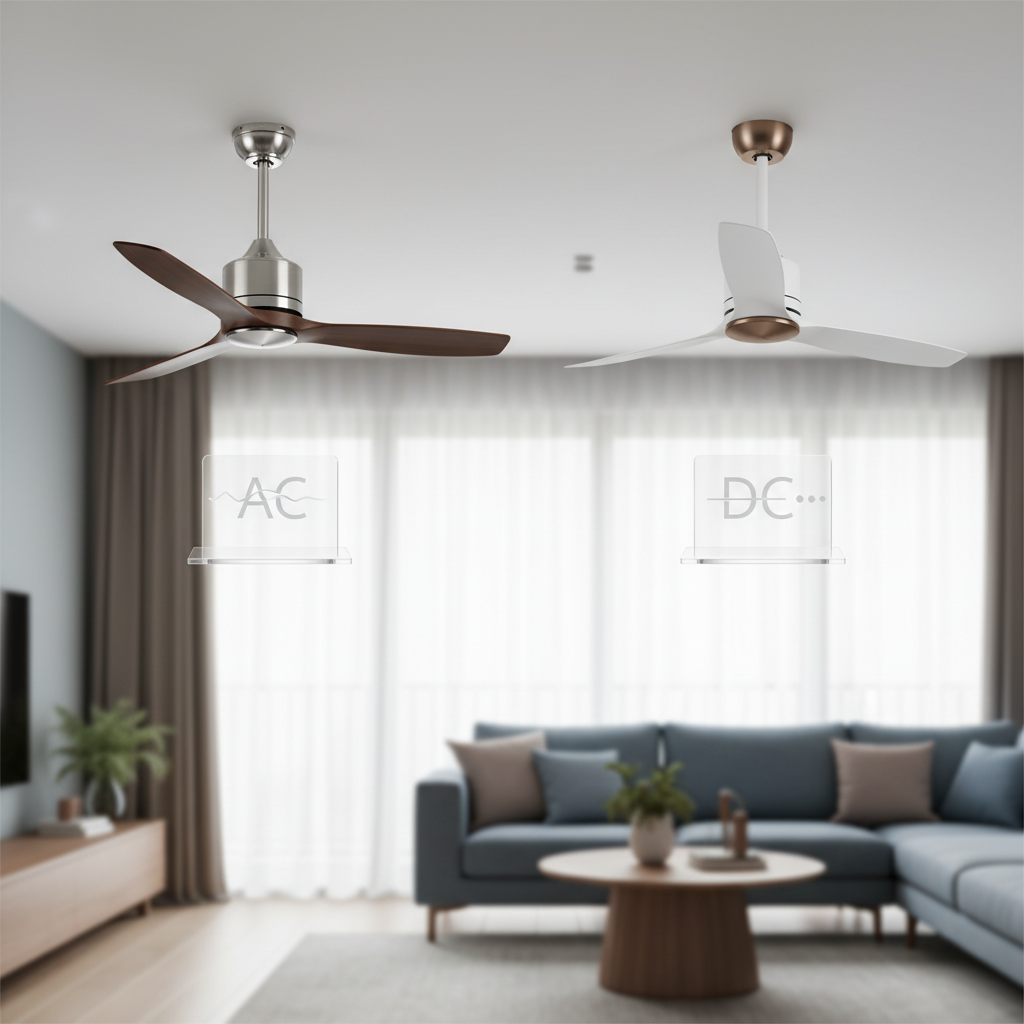
Navigating the world of ceiling fans, especially for rooms with lower ceilings, can feel like a challenge. You want comfort and style, but safety and practicality are paramount. For spaces with 8-foot ceilings, the solution often lies in hugger ceiling fans, a specialized design engineered to maximize headroom while still delivering excellent air circulation. These low-profile fans have evolved significantly, now offering a blend of advanced technology, energy efficiency, and sleek aesthetics to complement any modern home. From smart controls to whisper-quiet DC motors, the 2026 market presents a wealth of options designed to perfectly fit your compact spaces, ensuring both comfort and sophisticated design.
What Are Hugger Ceiling Fans? An Overview
Hugger ceiling fans, often referred to as flush mount or low-profile fans, are designed to be installed directly against the ceiling without a downrod. This unique design ensures the fan blades maintain the National Electric Code’s recommended minimum of seven feet of clearance from the floor, making them an essential and safe choice for rooms with lower ceiling heights, typically under eight feet.
The evolution of ceiling fans has brought us from basic utility to sophisticated home integration. Early models often required significant vertical space, making them unsuitable for many homes. Today’s hugger fans, however, merge form and function, providing effective cooling and lighting solutions for spaces that traditionally couldn’t accommodate standard ceiling fans. This shift reflects a growing demand for space-saving, aesthetically pleasing, and highly functional home appliances. Popular brands like Hunter, Prominence Home, Mainstays, Honeywell, and Bella Deport are at the forefront, offering diverse models that cater to various tastes and technical requirements.
Classifying Hugger Fans by Function and Design
Hugger ceiling fans come in a variety of styles and configurations, each tailored to specific needs and aesthetic preferences. Understanding these classifications can help you pinpoint the perfect fan for your space.
Hugger Fans with Lights: Pros, Cons, Selection
Many hugger fans integrate lighting, offering a dual-purpose solution for rooms where both air circulation and illumination are needed. These fans eliminate the need for a separate light fixture, decluttering the ceiling and enhancing the streamlined look characteristic of hugger designs.
- Pros: Space-saving by combining two fixtures into one, provides ambient or task lighting, often dimmable, and can feature energy-efficient LED bulbs.
- Cons: Integrated LED lights can be difficult or costly to repair if they fail, and the light brightness might not always be adjustable on all models.
- Selection: Look for models with dimmable LEDs and color temperature options to suit different moods and tasks. Consider the brightness (lumens) to ensure it adequately lights your room. Brands like Homebaa and Prominence Home offer popular models with integrated LED lights.
|
Our Picks for the Best Ceiling fan in 2026
As an Amazon Associate I earn from qualifying purchases.
|
||
| Num | Product | Action |
|---|---|---|
| 1 | Ceiling Fans with Lights, 52 Inch Modern Ceiling Fans with Lights and Remote Control, DC Reversible Motor, Noiseless, 3CCT, Ceiling Fan for Bedroom, Living Room, Apartment Indoor/Outdoor Use |

|
| 2 | Passky Ceiling Fans with Lights, 52 inch Sleek Ceiling Fan with Light and Remote Control, 3CCT, Dimmable, Reversible, Noiseless, Black Ceiling Fan for Bedroom, Living Room |
|
| 3 | Ceiling Fans with Lights, 42 Inch Ceiling Fan with Light And Remote, 3CCT Flush Moun Low Profile Ceiling Fans, 6 Speed Noiseless LED Ceiling Fan, Black Ceilings Fan with Remote for Bedroom Living Room |
|
| 4 | Ceiling Fans with Lights - 42 Inch Low Profile Ceiling Fan with Light and Remote, Reversible DC Motors, 3CCT Dimmable Timer Noiseless, Black Flush Mount Ceiling Fan for Bedroom/Living Room |
|
| 5 | Asyko 46" Low Profile Ceiling Fan with Light and Remote Control,Black Modern Flush Mount Ceiling Fan with Lights for Bedroom, Reversible, Dimmable, Noiseless |
|
| 6 | Fanbulous 52 Inch Ceiling Fans with Lights and Remote, Stepless Color Temperature Change & Dimmable 20W LED Ceiling Fan, 6 Speeds Reversible Quiet DC Motor for Bedroom, Living Room, Apartment, Black |
|
| 7 | Amico Ceiling Fans with Lights, 42 inch Low Profile Ceiling fan with Light and Remote Control, Flush Mount, Reversible, 3CCT, Dimmable, Noiseless, Black Ceiling Fan for Bedroom, Indoor/Outdoor Use |
|
| 8 | ZMISHIBO 52 Inch Ceiling Fan with Light, App&Remote Control, Flush Mount Low Profile, Dimmable 20W LED Light, Quiet Reversible Motor for Bedroom, Living Room, Apartment, Black |
|
| 9 | addlon Ceiling Fans with Lights, 42 Inch Low Profile Ceiling Fan with Light and Remote Control, Flush Mount, Reversible, 3CCT, Dimmable, Quiet, Black Small Ceiling Fan for Bedroom Indoor/Outdoor Use |
|
| 10 | ZMISHIBO Ceiling Fans with Lights and Remote, 19.7'' Low Profile Ceiling Fan, 3000-6000K Dimmable Modern Flush Mount LED Fan Light, 6 Wind Speeds, Black Fandelier Ceiling Fans for Bedroom |
|
Hugger Fans Without Lights: Pros, Cons, Selection
For rooms that already have ample lighting or where a minimalist aesthetic is preferred, hugger fans without integrated lights are an excellent choice.
- Pros: Simpler design, often more affordable, and can be easier to install due to fewer electrical connections. They contribute to a clean, uncluttered ceiling line.
- Cons: Requires a separate lighting solution, which might add to installation complexity if not already in place.
- Selection: Ideal for bedrooms, hallways, or areas where accent lighting is primary. Focus on airflow, noise level, and design to ensure it complements existing decor.
Decorative Hugger Fans: Styles, Materials, Suitable Spaces
Decorative hugger fans prioritize aesthetics, turning a functional appliance into a design statement. They are available in an array of styles, from modern and contemporary to traditional and rustic.
- Styles: Think sleek, bladeless designs, industrial farmhouse looks, or elegant models with unique finishes and crystal accents.
- Materials: Common materials include solid wood for a warm, natural texture, various metals (like matte black or brushed nickel) for modern or industrial vibes, and ABS plastic for versatility and durability.
- Suitable Spaces: Perfect for living rooms, master bedrooms, or dining areas where the fan is meant to be a focal point. They enhance the room’s character without compromising on functionality. The Homebaa Modern Flower Shaped Dimming Ceiling Fan exemplifies a unique decorative approach.
Industrial Hugger Fans: Characteristics, Applications, Buying Tips
While often larger, some industrial-style fans are designed with a low profile for specific applications in residential and commercial settings with lower ceilings.
- Characteristics: Typically robust construction, powerful motors for maximum airflow, and often feature metal blades for durability. They prioritize function over elaborate aesthetics.
- Applications: Garages, workshops, covered patios, or large open-plan industrial-chic living spaces where significant air movement is required.
- Buying Tips: Prioritize CFM (Cubic Feet per Minute) for airflow capacity, motor durability, and suitability for the environment (e.g., damp-rated for outdoor use). The Honeywell Carnegie Industrial Farmhouse LED Ceiling Fan is an example of an industrial-inspired design.
Comparison Table of Popular Hugger Fan Types
| Feature | Hugger Fan with Lights | Hugger Fan Without Lights | Decorative Hugger Fan | Industrial Hugger Fan |
|---|---|---|---|---|
| Price Range | Mid to high (depending on light features) | Low to mid | Mid to high (design-focused) | Mid to high (power-focused) |
| Key Features | Integrated LED, dimmable options, remote control | Simpler operation, focus on airflow | Unique blade designs, premium finishes, smart controls | High CFM, durable construction, often metal blades |
| Brands | Prominence Home, Mainstays, Honeywell, Homebaa | Hunter (some models), Portage Bay | Casa Vieja, Bella Deport, Minka-Aire, Homebaa | Honeywell, specific commercial brands |
| Durability | Good, often with long-lasting LED components | Very good, fewer complex parts | Varies by material and craftsmanship | Excellent, built for heavy use |
| Pros | Dual function (light + air), space-saving | Minimalist, potentially quieter, easier installation | Enhances room aesthetic, unique statement piece | Powerful airflow, robust, long-lasting |
| Cons | LED repair challenges, potentially higher initial cost | Requires separate lighting | Higher cost for aesthetics, specific decor match | Can be louder, less aesthetic variety, heavier |
| Best For | Bedrooms, living rooms needing combined solutions | Hallways, small rooms with existing lighting, minimalist | Living rooms, dining rooms, design-conscious spaces | Garages, workshops, large utilitarian spaces |
Guide to Choosing the Right Hugger Fan
Selecting the ideal hugger ceiling fan involves more than just picking one that looks good. It requires considering your specific needs, room dimensions, motor technology, blade materials, and desired features.
Determine Your Needs: Room Size, Purpose
The first step is to assess the room where the fan will be installed.
- Room Size: For rooms up to 75 sq ft, a fan with a 29-36 inch blade span is suitable. For 76-144 sq ft, opt for 36-44 inches. For 144-225 sq ft, a 44-50 inch fan is ideal, and for 225-400 sq ft, choose 50-54 inches.
- Purpose: Is it for constant cooling in a bedroom, occasional air movement in a home office, or a decorative element in a living area? This dictates the required airflow, noise level, and feature set.
Select the Right Fan Size: A Quick Reference
Choosing the correct fan size is crucial for effective air circulation and safety.
| Room Size (Square Feet) | Recommended Fan Diameter (Inches) |
|---|---|
| Up to 75 | 29-36 |
| 76-144 | 36-44 |
| 144-225 | 44-50 |
| 225-400 | 50-54 |
Remember, for 8-foot ceilings, hugger fans are designed to ensure sufficient headroom, but blade span still impacts air delivery.
Choose the Fan Motor: AC vs DC, Pros and Cons
The motor type significantly influences a fan’s performance, energy efficiency, and noise level.
- AC Motors (Alternating Current):
- Pros: Generally more affordable upfront, reliable.
- Cons: Less energy-efficient, consume more power (up to 70% more than DC), can be bulkier and noisier, offer fewer speed options (typically 3-4).
- DC Motors (Direct Current):
- Pros: Highly energy-efficient, consume significantly less power, quieter operation, smaller and lighter design, more durable, offers greater speed control (often 6+ speeds), faster response, and typically includes a remote-controlled reverse function.
- Cons: Higher initial cost, may require an AC to DC converter.
- Verdict: While pricier initially, DC motor fans offer substantial long-term savings on electricity bills and a superior user experience with quiet operation and precise control.
Select Blade Material: Wood, Metal, or Plastic
The material of the fan blades affects airflow, noise, durability, and aesthetics.
- Wood Blades:
- Characteristics: Offer a classic, natural aesthetic.
- Pros: Generally quieter than metal blades, durable if made from high-quality, moisture-resistant wood.
- Cons: May offer slightly reduced airflow compared to metal.
- Best For: Bedrooms and living rooms where a traditional or rustic look and quiet operation are desired.
- Metal Blades (Aluminum, Steel, Stainless Steel):
- Characteristics: Strong, rigid, and efficient at moving air.
- Pros: Very durable, provide strong airflow. Aluminum is lightweight and corrosion-resistant, while stainless steel is excellent for high-humidity areas.
- Cons: Can be noisier, heavier (requiring stronger motors), and may be prone to rust in humid environments (unless stainless steel).
- Best For: Industrial settings, large rooms, or outdoor areas (with appropriate ratings) where maximum airflow and durability are paramount.
- Plastic Blades (ABS):
- Characteristics: Made from Acrylonitrile Butadiene Styrene (ABS), a robust thermoplastic.
- Pros: Lightweight, affordable, highly durable, resistant to warping, chipping, cracking, and chemical corrosion. Easy to clean and maintain, weather-resistant, and available in many styles and colors. Quieter than metal.
- Cons: May not move as much air as metal in very large rooms.
- Best For: Bedrooms, studies, outdoor spaces (with IP/tropical ratings), and homes desiring modern designs and low maintenance.
Key Features to Consider: Beyond the Basics
Modern hugger fans offer a range of features that enhance convenience, comfort, and energy efficiency.
- Remote Control: A standard feature in most modern fans, allowing easy adjustment of speed, light, and direction from anywhere in the room.
- Timer Function: Useful for setting the fan to turn off after a set period, promoting energy saving and comfortable sleep.
- Reverse Function (Seasonal Reversal): Allows blades to rotate clockwise in winter to push warm air down and counter-clockwise in summer for a cooling breeze. Many DC fans offer this directly via remote.
- Smart Home Integration: Connectivity with Wi-Fi, Bluetooth, voice assistants (Alexa, Google Assistant), and mobile apps enables remote control, scheduling, and integration with other smart devices.
- Anti-Dust Coating: Reduces maintenance by preventing dust buildup on blades.
- Aerodynamic Blade Design: Optimized blade shapes improve airflow and cooling efficiency.
- Integrated Up-lighting: Some advanced models feature up-lighting that adds ambient glow to the ceiling, blurring the line between fan and light fixture.
Top-Rated Hugger Fans for 8-Foot Ceilings in 2026
The market for hugger fans in 2026 is robust, featuring innovations in design, motor technology, and smart features. Here are some of the popular and highly-rated models and brands to consider for your 8-foot ceilings, showcasing the diversity available:
- Mainstays 42-inch Hugger Metal Indoor Ceiling Fan: Praised for its modern look, ease of installation, and energy-efficient LED bulb.
- Prominence Home Benton 52-inch Traditional Ceiling Fan: Offers a sleek design, often with matte finishes and stylish wooden blades, providing great air circulation and ample LED lighting. It’s noted for its easy installation.
- Hunter Fan Company (various low-profile models): Hunter continues to be a strong contender with options like the Crestfield Low Profile and ZenTech series. The ZenTech fans are particularly notable for being 40% slimmer, offering enhanced air velocity, and coming in attractive bladeless or chandelier-like designs with smart capabilities.
- Homebaa Simple Round Wood Bladeless Ceiling Fan with LED Light: An excellent choice for maximizing space and providing both airflow and dimmable brightness with remote control.
- Anslee Low Profile Ceiling Fan with LED Light: Features reversible wooden blades, quiet operation, and energy-saving LED bulbs, suitable for rooms under 9 feet.
- Honeywell Carmel Indoor LED Ceiling Fan: A versatile option for smaller spaces, featuring dual-finish blades and a reversible motor for year-round comfort.
- Bella Deport Indoor Crystal White Ceiling Fan with Integrated LED Light: This flush-mounted fan uses a quiet DC motor and offers smart app control, 6-speed settings, and dimmable 3-color tones to create ambiance.
- Pacific Core Rattan Indoor Black Low Profile Flush Mount Ceiling Fan: Stands out with a unique bohemian design, featuring an iron frame and rattan shade. It includes a quiet, energy-efficient DC motor with 6 speed settings.
When evaluating these options, consider the balance between design aesthetics, required airflow (CFM), integrated features (like lighting and smart controls), and motor type for long-term energy savings and quiet operation.
“For homes with lower ceilings, hugger fans aren’t just a design choice; they’re a necessity that ensures both safety and comfort without compromising on style.” – Reviewhma.com Admin, Ceiling Fan Technician.
Installation and Maintenance Guide for Hugger Fans
Proper installation and regular maintenance are crucial for ensuring the safety, longevity, and optimal performance of your hugger ceiling fan.
Safe Installation Steps for Hugger Fans
Installing a ceiling fan requires careful attention to safety and adherence to manufacturer instructions. If you’re unsure, it’s always best to consult a professional electrician.
- Safety First: Always turn off the power to the circuit at your breaker box and use a voltage tester to confirm no current is flowing. Wear safety glasses and gloves. Use a sturdy stepladder.
- Prepare the Area: Clear furniture and lay down a drop cloth to protect the floor from dust or debris.
- Read the Manual: Each fan model has specific instructions. Read them thoroughly before starting.
- Secure Mounting Bracket: The fan’s mounting bracket must be securely attached to a UL-listed electrical box rated for ceiling fan support, or directly to a ceiling joist if the fan is heavy. Do not rely solely on an old light fixture box without verifying its capacity.
- Connect Wiring: Match the color-coded wires (typically black to black, white to white, and ground to ground) from the fan to the house wiring, securing all connections with wire nuts.
- Hang the Fan: Carefully lift the fan motor assembly and attach it to the mounting bracket as per instructions. For hugger fans, this usually means mounting flush. Ensure all components are securely fastened to prevent wobbling.
- Attach Blades and Light Kit: Install the blades and any light kit components according to the manual.
- Test Operation: Restore power at the circuit breaker and test all fan functions, including speeds, light (if applicable), and reverse switch.
- Clearance: Ensure fan blades are at least 7 feet above the floor and at least 18 inches from walls or other objects to prevent accidents and optimize airflow.
How to Clean and Maintain Your Hugger Fan
Regular cleaning and maintenance extend your fan’s lifespan and keep it operating efficiently.
- Power Off: Always turn off the fan at the wall switch and then at the circuit breaker before cleaning.
- Dusting Blades: Place an old pillowcase or sheet under the fan to catch dust. Use a damp microfiber cloth (lightly sprayed with water and mild dish soap) or a fan duster to wipe each blade from the center outwards to trap dust.
- Clean Housing and Canopy: Use a dry microfiber cloth or an extendable duster to clean the motor housing, canopy, and downrod. For stubborn grime, a damp cloth can be used. Compressed air can help clear dust from motor vents.
- Light Fixture: If your fan has a light, remove glass shades and wash them in warm, soapy water. Wipe bulbs with a dry cloth.
- Dry Completely: Ensure all components are thoroughly dry before restoring power to prevent water spots and protect the finish.
- Regular Inspection: Visually inspect your fan every 6-12 months for loose screws, cracks in blades, or frayed wires. Tighten any loose connections.
Common Issues and How to Troubleshoot Them
- Wobbling Fan: Often caused by unbalanced blades or loose mounting. Turn off the power, check and tighten all screws on the blades and mounting bracket. A fan balancing kit can help re-balance blades.
- Noisy Operation: Could be due to a loose component, dirty motor, or a low-quality motor. Clean the fan thoroughly. If it’s a constant hum, especially with older AC motors, consider if a DC motor fan would be a quieter solution.
- Poor Airflow: Ensure the fan is set to the correct seasonal direction (counter-clockwise for cooling). Clean blades to remove dust buildup, which can impede airflow. For hugger fans, remember that their flush design might inherently offer slightly less air circulation than standard fans with downrods.
Conclusion
Choosing the best hugger fan for your 8-foot ceilings in 2026 means embracing a world of stylish, efficient, and smart cooling solutions. These low-profile designs are no longer just a compromise for limited vertical space; they are a testament to how modern technology and innovative design can transform comfort and aesthetics in any home. By carefully considering factors such as motor type, blade material, and smart features, you can select a hugger fan that not only enhances air circulation and energy efficiency but also integrates seamlessly into your living space, reflecting your unique style.
With the right hugger fan, you can enjoy optimal comfort and a sleek, uncluttered ceiling, even in rooms where traditional fans simply won’t fit. What features are most important to you in your next hugger ceiling fan?
Frequently Asked Questions
What makes a ceiling fan “hugger” style?
A hugger ceiling fan, also known as a flush mount or low-profile fan, is designed to mount directly against the ceiling without using a downrod. This distinctive style allows the fan blades to sit closer to the ceiling, providing essential head clearance and safety, particularly in rooms with ceilings that are 8 feet high or less.
Are hugger fans less effective than regular fans?
Hugger fans can sometimes circulate air less effectively than standard fans with downrods, especially in larger rooms, because their blades are closer to the ceiling, which can lead to more turbulent air. However, for rooms with low ceilings, they are often the only safe and practical option, and modern designs are increasingly optimized for efficient airflow.
What size hugger fan do I need for an 8-foot ceiling?
For an 8-foot ceiling, you’ll need a hugger fan that fits your room’s square footage. Generally, a 36-44 inch fan is suitable for rooms up to 144 sq ft, while a 44-50 inch fan works well for rooms up to 225 sq ft. Always refer to a fan sizing chart and ensure at least 7 feet of blade-to-floor clearance.
Can I install a hugger fan myself?
While it’s possible for a DIY enthusiast, installing a hugger fan requires basic electrical knowledge and adherence to safety protocols. You must turn off power at the circuit breaker, use a fan-rated electrical box, and follow manufacturer instructions carefully. If uncertain, hiring a professional electrician is recommended.
How often should I clean my hugger ceiling fan?
For optimal performance and to prevent dust and allergens from circulating, it’s recommended to clean your hugger ceiling fan every 1-3 months, or more frequently if it’s in a dusty environment or used constantly. Regular dusting and occasional wiping of blades and housing will suffice.
What are the benefits of a DC motor in a hugger fan?
DC motors in hugger fans offer significant advantages, including higher energy efficiency (consuming up to 70% less power than AC motors), quieter operation, a more compact and lightweight design, and greater control over fan speeds (often 6+ settings). These benefits lead to lower electricity bills and a more comfortable, customizable user experience.