Living by the coast offers unparalleled beauty and tranquility, but it also presents unique challenges for home appliances, especially ceiling fans. The relentless combination of high humidity, corrosive salt air, strong winds, and intense UV rays can quickly degrade standard fans, leading to rust, reduced performance, and premature failure. Choosing the right ceiling fan for your coastal home isn’t just about aesthetics; it’s about selecting a durable, high-performance unit specifically engineered to withstand these harsh environmental elements.
This comprehensive guide will help you navigate the world of coastal-friendly ceiling fans. We’ll explore the specific environmental threats, demystify fan ratings (damp, wet, and coastal), highlight essential materials and features, and provide practical advice for selecting, installing, and maintaining the perfect fan that will bring comfort and style to your seaside sanctuary for years to come.
Understanding the Unique Challenges of Coastal Environments
Coastal homes face a constant battle against natural elements that can wreak havoc on conventional ceiling fans. Understanding these challenges is the first step toward making an informed purchase.
High humidity is a persistent issue in coastal areas, leading to moisture accumulation that can penetrate motor housings and electrical components, causing corrosion and short circuits. This moisture also promotes the growth of mold and mildew, which can affect both the fan’s appearance and its air quality.
Perhaps the most destructive factor is corrosive salt air. Microscopic salt particles carried inland by sea breezes cling to surfaces, and when combined with moisture, they accelerate the oxidation process, rapidly corroding metal parts and finishes. This can lead to unsightly rust stains, compromised structural integrity, and eventually, mechanical failure.
Strong winds and frequent storms are also common along coastlines. A poorly designed fan can swing violently, risking damage to itself or the ceiling. Blades can warp, crack, or even detach under severe wind stress if not made from robust, weather-resistant materials. Finally, intense ultraviolet (UV) radiation from prolonged sun exposure can fade colors, weaken plastics, and cause materials to become brittle over time, diminishing both the fan’s appearance and lifespan.
Decoding Fan Ratings: Damp, Wet, and Coastal-Rated Explained
When selecting a fan for a coastal home, understanding its environmental rating is paramount. These ratings indicate the level of moisture and weather exposure a fan can safely withstand.
Damp-Rated Fans
|
Our Picks for the Best Ceiling fan in 2026
As an Amazon Associate I earn from qualifying purchases.
|
||
| Num | Product | Action |
|---|---|---|
| 1 | ZMISHIBO Ceiling Fans with Lights and Remote, 19.7'' Low Profile Ceiling Fan, 3000-6000K Dimmable Modern Flush Mount LED Fan Light, 6 Wind Speeds, Black Fandelier Ceiling Fans for Bedroom |

|
| 2 | addlon Ceiling Fans with Lights, 42 Inch Low Profile Ceiling Fan with Light and Remote Control, Flush Mount, Reversible, 3CCT, Dimmable, Quiet, Black Small Ceiling Fan for Bedroom Indoor/Outdoor Use |
|
| 3 | Asyko 46" Low Profile Ceiling Fan with Light and Remote Control,Black Modern Flush Mount Ceiling Fan with Lights for Bedroom, Reversible, Dimmable, Noiseless |
|
| 4 | ZMISHIBO 52 Inch Ceiling Fan with Light, App&Remote Control, Flush Mount Low Profile, Dimmable 20W LED Light, Quiet Reversible Motor for Bedroom, Living Room, Apartment, Black |
|
| 5 | Fanbulous 52 Inch Ceiling Fans with Lights and Remote, Stepless Color Temperature Change & Dimmable 20W LED Ceiling Fan, 6 Speeds Reversible Quiet DC Motor for Bedroom, Living Room, Apartment, Black |
|
| 6 | Ceiling Fans with Lights, 42 Inch Ceiling Fan with Light And Remote, 3CCT Flush Moun Low Profile Ceiling Fans, 6 Speed Noiseless LED Ceiling Fan, Black Ceilings Fan with Remote for Bedroom Living Room |
|
| 7 | Ceiling Fans with Lights, 52 Inch Modern Ceiling Fans with Lights and Remote Control, DC Reversible Motor, Noiseless, 3CCT, Ceiling Fan for Bedroom, Living Room, Apartment Indoor/Outdoor Use |
|
| 8 | Ceiling Fans with Lights - 42 Inch Low Profile Ceiling Fan with Light and Remote, Reversible DC Motors, 3CCT Dimmable Timer Noiseless, Black Flush Mount Ceiling Fan for Bedroom/Living Room |
|
| 9 | Amico Ceiling Fans with Lights, 42 inch Low Profile Ceiling fan with Light and Remote Control, Flush Mount, Reversible, 3CCT, Dimmable, Noiseless, Black Ceiling Fan for Bedroom, Indoor/Outdoor Use |
|
| 10 | Passky Ceiling Fans with Lights, 52 inch Sleek Ceiling Fan with Light and Remote Control, 3CCT, Dimmable, Reversible, Noiseless, Black Ceiling Fan for Bedroom, Living Room |
|
Damp-rated fans are designed for indoor spaces with high humidity or covered outdoor areas that are protected from direct rain, snow, or splashing. Think of locations like screened-in porches, covered patios, or bathrooms where moisture is present but not directly impacting the fan. These fans feature moisture-resistant components but lack full waterproofing, making them unsuitable for open-air coastal exposure where rain and salt spray are direct threats.
Wet-Rated Fans
Wet-rated fans offer a higher level of protection, engineered to handle direct exposure to rain, snow, and splashing water. They typically feature sealed motors, waterproof housings, and corrosion-resistant materials to protect internal electrical components. These are ideal for fully exposed outdoor spaces such as open pergolas, gazebos, or uncovered patios. While significantly more durable than damp-rated models, standard wet-rated fans may still not offer adequate protection against the highly corrosive effects of concentrated salt air found in immediate beachfront locations.
Coastal-Rated (Marine-Grade) Fans
For homes directly exposed to ocean spray and salt-laden air, coastal-rated—often referred to as marine-grade—fans are the gold standard. These fans are specifically engineered to endure the most corrosive environments, surpassing the protection offered by typical wet-rated models. Coastal-rated fans undergo rigorous testing for salt spray, UV resistance, and corrosion, ensuring their longevity and performance. They are built with advanced materials and finishes to resist pitting, discoloration, and “white-rust” caused by saltwater. This makes them the ideal choice for beachfront properties, boat docks, or any outdoor area within 5-10 kilometers of the coastline.
Here’s a quick comparison of the different ratings:
| Feature/Rating | Damp-Rated Fans | Wet-Rated Fans | Coastal-Rated (Marine-Grade) Fans |
|---|---|---|---|
| Moisture Exposure | Indirect moisture, high humidity | Direct rain, splashing, high humidity | Direct rain, splashing, extreme humidity, highly corrosive salt air |
| Ideal Locations | Covered patios, screened porches, bathrooms | Open patios, pergolas, gazebos, poolside areas | Oceanfront properties, boat docks, any area with direct salt spray |
| Corrosion Resistance | Basic | Enhanced | Superior (specifically salt-air resistant) |
| Durability | Good for protected areas | Very good for exposed water | Excellent for extreme coastal conditions |
Key Features and Materials for Salt Air Resistance
To truly withstand the rigors of coastal living, ceiling fans need to be constructed from specific materials and incorporate protective features.
Corrosion-Resistant Materials
The foundation of a durable coastal fan lies in its materials. Marine-grade stainless steel, particularly 316-grade, is highly resistant to pitting and corrosion from salt air and water. Aluminum is another excellent choice, being naturally rust-resistant and lightweight. Composite materials, such as ABS high-grade plastic, are entirely waterproof and will not warp, crack, or peel in humid or salty conditions. These materials are crucial for the motor housing, hardware, and especially the blades.
Protective Finishes and Coatings
Beyond the base material, specialized finishes and coatings significantly enhance a fan’s resilience. Galvanization, where metal parts are dipped in hot zinc, provides a robust layer of corrosion protection. Anodization, an electrolytic acid bath process, creates a thick, durable oxide layer on aluminum that resists corrosion and wear. Resilient coating treatments and UV-inhibitor coatings are also vital to prevent fading, chalking, and material degradation from prolonged sun exposure. These protective layers act as a shield against the elements, extending the fan’s aesthetic appeal and functional life.
Durable Motor and Construction
The motor is the heart of any ceiling fan, and in coastal environments, it needs superior protection. Look for fans with fully sealed motors and waterproof housings to prevent moisture and salt ingress. Rust-resistant hardware throughout the fan’s assembly is essential to maintain structural integrity. Many top coastal fans utilize DC (Direct Current) motors. DC motors are renowned for their energy efficiency, quiet operation, and precise speed control, offering powerful airflow without consuming excessive electricity. Their typically enclosed design also contributes to better protection against environmental factors.
Blade Design and Material
Fan blades are directly exposed to the elements, making their material and design critical. Blades made from ABS plastic or other composites are ideal as they are impervious to moisture and salt, ensuring they won’t warp, droop, or corrode. While some high-end coastal fans might feature treated solid wood blades, these typically undergo extensive kiln-drying and all-weather sealant applications to resist warping and degradation. The design should also be wind-defiant, securely attached to prevent wobbling or damage during strong gusts, ensuring continuous, reliable performance even on blustery days.
Choosing the Right Coastal Fan for Your Space
Selecting the perfect coastal fan involves more than just finding a robust model; it requires tailoring the choice to your specific needs and aesthetic preferences.
Assessing Your Location
First, clearly define where the fan will be installed:
- Indoors (Coastal Homes): Even indoors, high humidity and ambient salt air can be a concern. A damp-rated fan might suffice for bedrooms or living areas, but consider a wet-rated or coastal-rated fan for humid indoor spaces like sunrooms, or if your home is very close to the ocean.
- Covered Outdoor Areas: For spaces like covered patios, screened-in porches, or lanais, a damp-rated fan is usually appropriate, as it’s protected from direct precipitation.
- Exposed Outdoor Areas: For open decks, pergolas, or any area directly exposed to rain, a wet-rated fan is the minimum requirement. However, if these areas are also within a few miles of the ocean, a coastal-rated or marine-grade fan offers the best long-term durability against salt air.
Size and Airflow Considerations
The size of your room or outdoor space dictates the appropriate fan diameter. A fan that is too small won’t provide adequate airflow, while one that’s too large can overpower the space. Manufacturers provide guidelines, often correlating fan diameter to square footage (e.g., 44-inch for up to 144 sq ft, 52-inch for 144-225 sq ft, 60+ inches for larger areas). Airflow is measured in Cubic Feet per Minute (CFM); higher CFM values indicate more powerful air movement, which is particularly beneficial in hot, humid coastal climates.
Style and Aesthetics
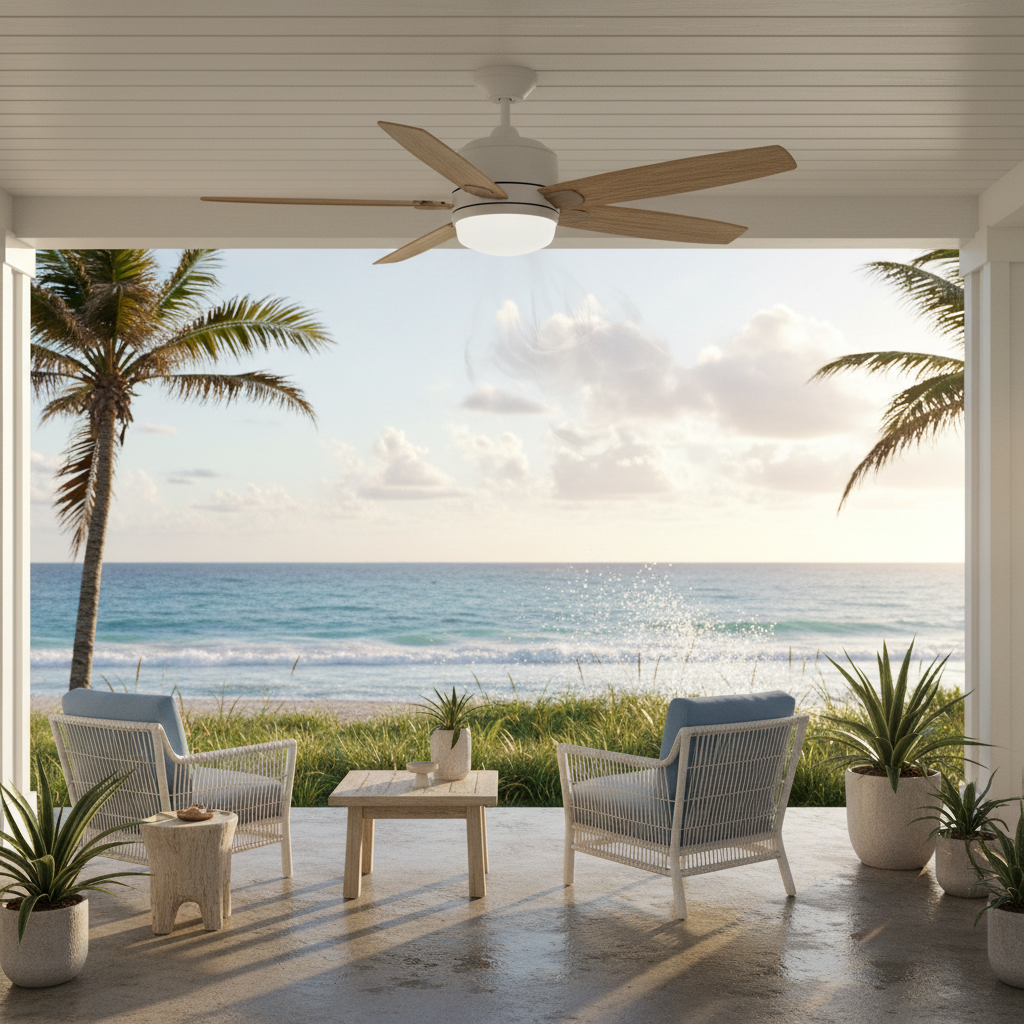
Coastal fans don’t have to sacrifice style for durability. Many brands offer a wide range of designs, from classic nautical and tropical styles (often featuring palm leaf or distressed wood-look blades) to sleek, modern, minimalist designs. Finishes like matte black, matte white, brushed nickel, noble bronze, or pewter are popular and offer good corrosion resistance. Look for designs that complement your home’s existing decor, whether it’s a rustic beach house or a contemporary oceanfront villa.
Smart Features and Controls
Modern coastal fans often come equipped with convenient features that enhance user experience. Remote controls allow for easy adjustment of fan speed and light settings. Some models offer smart home integration, allowing control via smartphone apps or voice assistants, providing greater convenience. Integrated LED light kits are common, offering energy-efficient illumination. For outdoor fans, sealed light kits are essential to prevent moisture intrusion. Reversible motor functions are also beneficial, allowing you to change the direction of airflow to create a cooling breeze in summer or gently recirculate warm air in cooler months.
Top Brands and Models for Coastal Living
Several reputable brands specialize in manufacturing high-quality ceiling fans built to endure coastal and salt air conditions. These brands understand the unique requirements and invest in superior materials and engineering.
Brands like Hunter, Minka Aire, Visual Comfort & Co., Casablanca, Fanimation, Kichler, and Big Ass Fans (with their Haiku Coastal line) are frequently cited for their robust coastal offerings. These manufacturers typically utilize marine-grade stainless steel, high-grade composite blades (like ABS plastic), and advanced protective finishes to ensure maximum resistance against corrosion, UV damage, and moisture. Many incorporate energy-efficient DC motors for powerful yet quiet operation, along with wet-rated or coastal-rated designations. You’ll find a variety of styles, from traditional to ultra-modern, often with integrated LED lighting and smart control options, allowing homeowners to find a fan that perfectly combines durability with their desired aesthetic.
Installation and Maintenance Tips for Longevity
Even the most robust coastal fan requires proper installation and consistent maintenance to ensure its longevity and optimal performance.
Begin with professional installation. Given the challenging coastal conditions and the need for electrical safety, having a qualified electrician install your fan is highly recommended. Ensure the mounting is secure and appropriate for the environment, especially in windy areas. For outdoor installations, ensure all wiring connections are properly sealed and protected from moisture.
Regular cleaning is crucial to prevent salt and moisture buildup. Wipe down the blades and motor housing frequently with a damp cloth to remove any salt residue, dust, and grime. A mild soap solution can be used for more thorough cleaning, followed by a rinse with clean water and immediate drying. Avoid abrasive cleaners or harsh chemicals, as these can strip protective finishes.
Seasonal inspections can help catch potential issues early. Check for any signs of rust, corrosion, or wear and tear on the blades, motor housing, and mounting hardware. Ensure all screws and connections are tight. If your fan has a light kit, check the seals for any cracks or deterioration that could allow moisture to enter. Addressing small issues promptly can prevent them from escalating into major repairs or replacements, thereby significantly extending the lifespan of your coastal ceiling fan.
“Investing in a coastal-rated fan is a decision that pays dividends in comfort and durability. The initial cost might be higher, but the peace of mind knowing your fan can withstand the ocean’s embrace is invaluable.” – Johnathan Reed, HVAC Specialist, Coastal Fan Solutions
Conclusion
Navigating the unique demands of coastal and salt air environments for your home appliances, particularly ceiling fans, requires a discerning eye and a focus on durability. By understanding the specific threats posed by humidity, salt, wind, and UV, and by prioritizing fans with appropriate damp, wet, or marine-grade ratings, you can make a choice that goes beyond mere aesthetics. Selecting models crafted from corrosion-resistant materials like marine-grade stainless steel or composite plastics, coupled with sealed motors and protective finishes, ensures your investment will continue to provide comfort and style for many years.
So, are you ready to choose a fan that truly embraces the coastal lifestyle, standing strong against the elements while keeping your home cool and breezy?
Frequently Asked Questions
What is the most important feature for a coastal fan?
The most critical feature for a coastal fan is its marine-grade or coastal rating, indicating it’s specifically engineered to resist the corrosive effects of salt air and high humidity, even more so than standard wet-rated fans.
Can regular outdoor fans be used near the ocean?
While wet-rated outdoor fans can withstand direct rain, they are generally not sufficient for environments with heavy salt air. Salt is highly corrosive and requires fans with marine-grade materials and specialized finishes to prevent rapid deterioration.
How often should I clean my coastal ceiling fan?
For optimal longevity, it’s recommended to clean your coastal ceiling fan at least once a month, and more frequently if it’s in a highly exposed area, to remove accumulated salt, dust, and moisture.
Are wooden blades suitable for coastal fans?
Most wooden blades are not ideal for coastal environments due to moisture absorption and warping. However, some high-end coastal fans use specially treated and sealed composite wood blades designed to resist these issues.
What is a DC motor and why is it good for coastal fans?
A DC (Direct Current) motor is an energy-efficient motor known for its quiet operation, multiple speed settings, and powerful airflow. For coastal fans, their typically sealed and enclosed design offers enhanced protection against moisture and salt ingress, contributing to greater durability.
Are coastal fans more expensive?
Yes, coastal-rated fans tend to be more expensive than standard indoor or even wet-rated outdoor fans due to the specialized, corrosion-resistant materials, advanced engineering, and rigorous testing required to withstand harsh salt air environments. This higher initial cost is often justified by their extended lifespan and performance in challenging conditions.