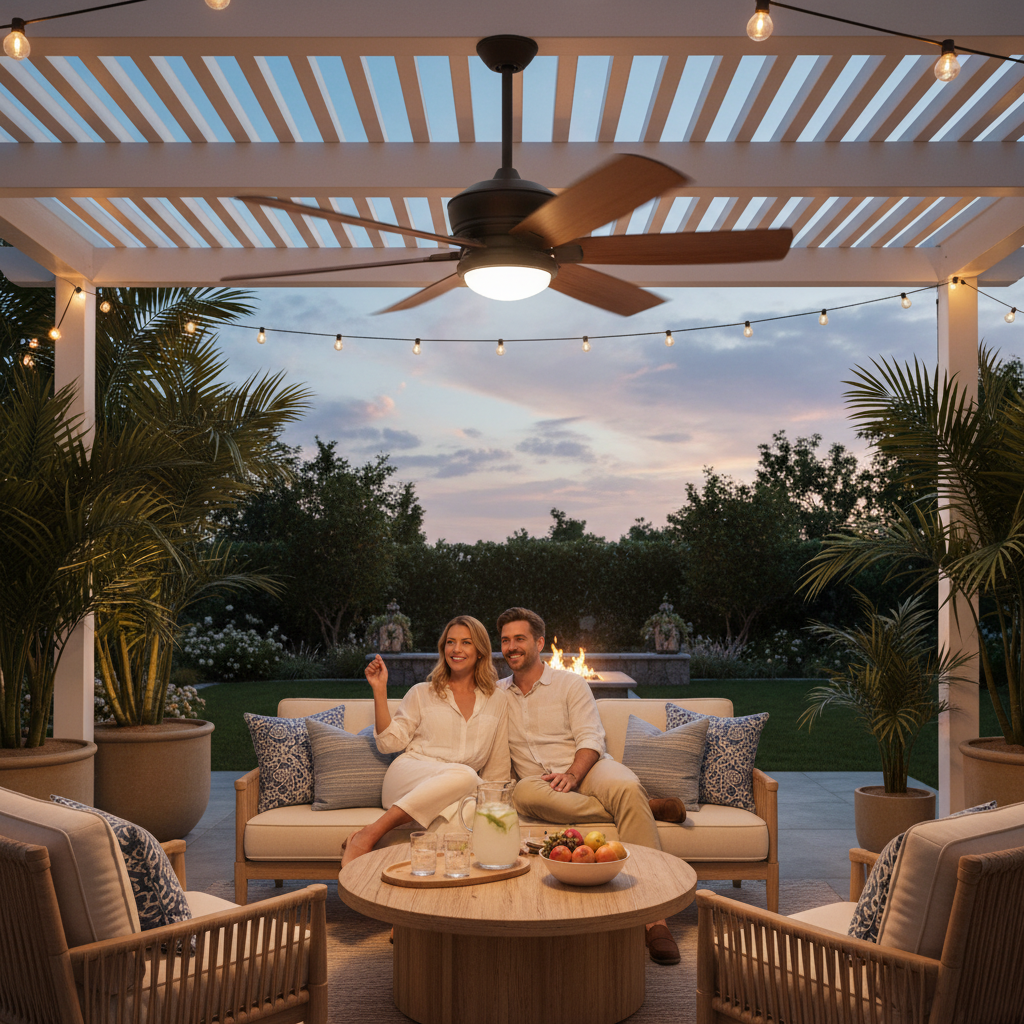
Have you ever wished your ceiling fan could simply disappear when not in use, transforming into an elegant light fixture? Modern ceiling fans have come a long way from their purely functional predecessors, now offering innovative solutions that blend seamlessly with contemporary home aesthetics. Among these innovations, retractable blade ceiling fans, often called “fandeliers,” stand out as a revolutionary blend of form and function, providing both cooling comfort and sophisticated lighting without the visual clutter of exposed blades.
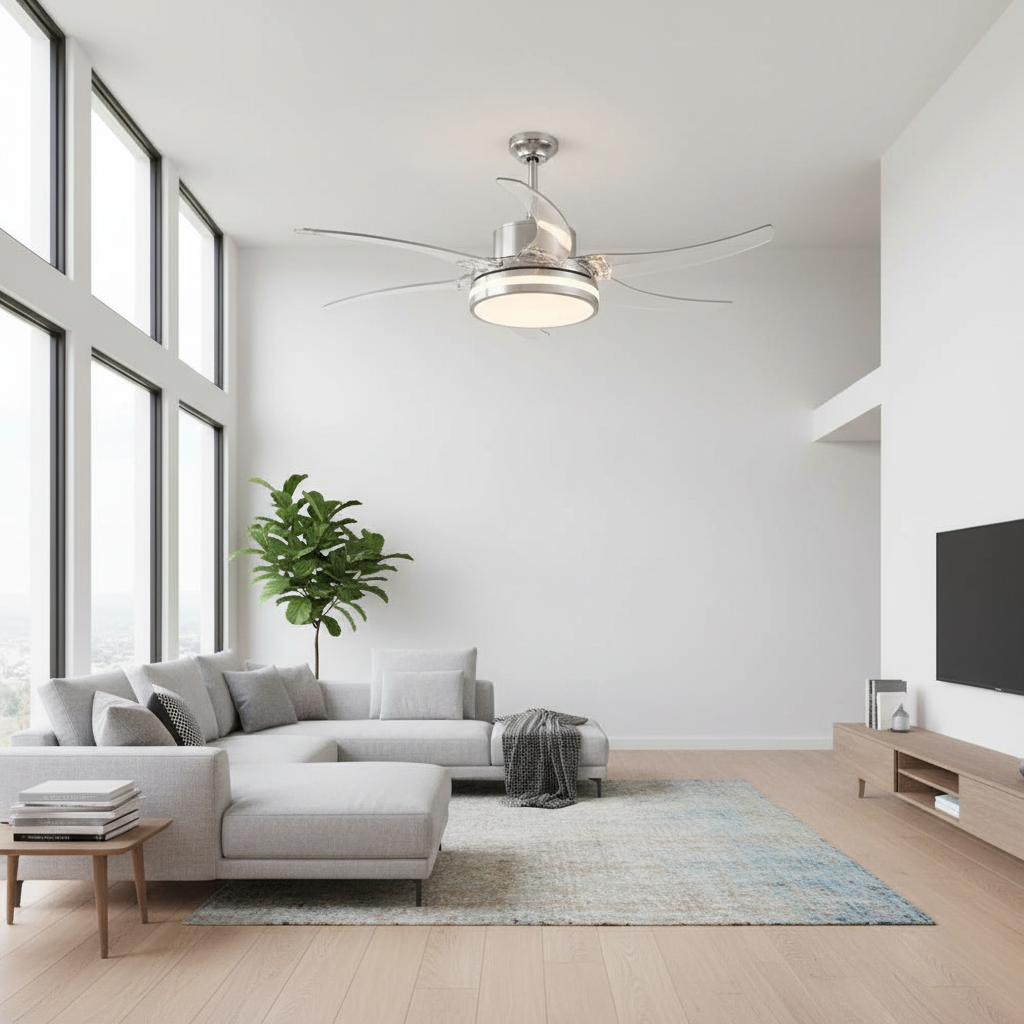
This comprehensive guide will delve into the world of fandeliers, exploring their unique features, comparing them to traditional ceiling fans, offering essential tips for selection, and providing practical advice on installation and maintenance. By the end, you’ll be equipped with all the knowledge needed to choose the perfect retractable blade ceiling fan to enhance your living space.
What Are Retractable Blade Ceiling Fans? An Overview of the Fandelier Market
A retractable blade ceiling fan is an innovative lighting and cooling fixture that combines the functionality of a ceiling fan with the aesthetic appeal of a chandelier. Its most distinctive feature is the ability of its blades to automatically extend when the fan is in operation and retract discreetly back into the central housing when turned off. This clever design allows the unit to appear as a stylish light fixture or chandelier, only revealing its fan blades when cooling is desired.
The evolution of ceiling fan technology has seen a significant shift from basic, utilitarian models to sophisticated, multi-functional units. Retractable blade fans represent a pinnacle of this development, catering to a growing demand for minimalist design and smart home integration. They have gained immense popularity in the modern home furnishing market for their ability to offer flexible airflow and adapt to various room requirements, making them a contemporary choice for style-conscious homeowners.
Classifying Retractable Blade Ceiling Fans by Function and Design
Retractable blade ceiling fans offer a diverse range of styles and features, allowing them to fit into almost any interior design scheme while providing essential comfort. Understanding these classifications can help you pinpoint the ideal fandelier for your home.
Fandeliers with Integrated LED Lighting
The vast majority of retractable blade ceiling fans come equipped with integrated LED lighting, making them a true two-in-one fixture.
- Advantages: This dual functionality means you get both cooling and illumination from a single ceiling fixture, reducing the need for separate lighting. Integrated LEDs are energy-efficient, offering long lifespans and often featuring dimmable options and adjustable color temperatures (from warm white to cool daylight) to set the perfect ambiance. Their sleek design often complements the minimalist aesthetic of the fan.
- Considerations: While convenient, the light output might be less intense than a dedicated chandelier or multiple light sources, so evaluate the lumens needed for your space. Replacing integrated LEDs can also be more complex than swapping a standard light bulb.
- Selection: Look for models with high lumen output if you need bright ambient light, and ensure dimming and color temperature controls are included for versatility.
|
Our Picks for the Best Ceiling fan in 2026
As an Amazon Associate I earn from qualifying purchases.
|
||
| Num | Product | Action |
|---|---|---|
| 1 | Fanbulous 52 Inch Ceiling Fans with Lights and Remote, Stepless Color Temperature Change & Dimmable 20W LED Ceiling Fan, 6 Speeds Reversible Quiet DC Motor for Bedroom, Living Room, Apartment, Black |

|
| 2 | ZMISHIBO Ceiling Fans with Lights and Remote, 19.7'' Low Profile Ceiling Fan, 3000-6000K Dimmable Modern Flush Mount LED Fan Light, 6 Wind Speeds, Black Fandelier Ceiling Fans for Bedroom |
|
| 3 | Ceiling Fans with Lights, 52 Inch Modern Ceiling Fans with Lights and Remote Control, DC Reversible Motor, Noiseless, 3CCT, Ceiling Fan for Bedroom, Living Room, Apartment Indoor/Outdoor Use |
|
| 4 | Passky Ceiling Fans with Lights, 52 inch Sleek Ceiling Fan with Light and Remote Control, 3CCT, Dimmable, Reversible, Noiseless, Black Ceiling Fan for Bedroom, Living Room |
|
| 5 | Ceiling Fans with Lights - 42 Inch Low Profile Ceiling Fan with Light and Remote, Reversible DC Motors, 3CCT Dimmable Timer Noiseless, Black Flush Mount Ceiling Fan for Bedroom/Living Room |
|
| 6 | Asyko 46" Low Profile Ceiling Fan with Light and Remote Control,Black Modern Flush Mount Ceiling Fan with Lights for Bedroom, Reversible, Dimmable, Noiseless |
|
| 7 | addlon Ceiling Fans with Lights, 42 Inch Low Profile Ceiling Fan with Light and Remote Control, Flush Mount, Reversible, 3CCT, Dimmable, Quiet, Black Small Ceiling Fan for Bedroom Indoor/Outdoor Use |
|
| 8 | ZMISHIBO 52 Inch Ceiling Fan with Light, App&Remote Control, Flush Mount Low Profile, Dimmable 20W LED Light, Quiet Reversible Motor for Bedroom, Living Room, Apartment, Black |
|
| 9 | Ceiling Fans with Lights, 42 Inch Ceiling Fan with Light And Remote, 3CCT Flush Moun Low Profile Ceiling Fans, 6 Speed Noiseless LED Ceiling Fan, Black Ceilings Fan with Remote for Bedroom Living Room |
|
| 10 | Amico Ceiling Fans with Lights, 42 inch Low Profile Ceiling fan with Light and Remote Control, Flush Mount, Reversible, 3CCT, Dimmable, Noiseless, Black Ceiling Fan for Bedroom, Indoor/Outdoor Use |
|
Decorative Retractable Fans (Design-Focused)
Beyond their functional aspects, fandeliers are celebrated for their decorative potential. When the blades are retracted, the fixture transforms into a statement piece, blending seamlessly with your decor.
- Styles: The market offers an array of styles, from opulent crystal designs that mimic traditional chandeliers to sleek, modern minimalist forms, and even rustic or industrial-inspired options. They can feature intricate metalwork, clear or frosted diffusers, and unique outer cages.
- Materials: Common materials include high-quality acrylic for the blades (due to its lightweight nature, crucial for retraction), various metals for the housing (e.g., brushed nickel, polished chrome, matte black, oil-rubbed bronze), and sometimes even wood accents for a warmer touch.
- Space Suitability: These fans are particularly well-suited for living rooms, dining rooms, bedrooms, and any area where aesthetics are as important as comfort. They can be a focal point in a master bedroom or a chic addition to a contemporary dining area.
Smart Ret retractable Ceiling Fans
Embracing the advancements in home automation, many fandeliers now incorporate smart features, offering unparalleled convenience and control.
- Features: These models typically include remote control operation for adjusting fan speeds, light settings, and blade retraction. More advanced smart fandeliers can connect to your home Wi-Fi, allowing control via smartphone apps or integration with voice assistants like Alexa or Google Home. They often boast features like programmable timers, sleep modes, and a reverse function for year-round air circulation (cooling in summer, heat distribution in winter).
- Benefits: Smart controls provide ultimate ease of use, allowing you to adjust settings from anywhere in the room or even outside your home. They also contribute to energy management by enabling precise control over fan and light usage.
Retractable vs. Traditional Ceiling Fans: A Comparative Analysis
When deciding between a retractable blade ceiling fan and a traditional one, it’s helpful to weigh their distinct characteristics. Each type offers specific advantages and disadvantages that cater to different preferences and needs.
| Feature | Ret retractable Blade Ceiling Fans (Fandeliers) | Traditional Ceiling Fans |
|---|---|---|
| Aesthetics | Sleek, chandelier-like when off; modern | Visible blades; traditional/industrial |
| Airflow Performance | Adjustable; can be slightly less powerful than large fixed blades | Fixed airflow strength; generally more powerful for raw cooling |
| Space-Saving | Blades retract, ideal for low ceilings/smaller rooms | Fixed blades take up more space |
| Noise Level | Generally quieter (50-60 dB max) due to lighter blades | Varies; can be louder (40-50 dB typical, higher for older/cheaper) |
| Initial Cost | Higher ($150-$500+, premium over $700) | Generally more affordable ($50-$150) |
| Installation | Often requires professional installation (complex) | Easier, often DIY-friendly |
| Maintenance | Lower dust collection when blades retracted | Blades exposed, collect more dust |
| Control | Remote, app, voice (smart features) | Wall switch, basic remote |
| Durability | More complex mechanism, potentially higher failure rate | Simpler design, generally more durable |
Advantages of Ret retractable Blade Ceiling Fans
Retractable blade fans truly shine in their ability to offer a unique blend of style and practicality. When the fan is off, the blades tuck away, transforming the unit into an elegant light fixture. This minimalist, space-saving design is perfect for smaller rooms or areas where you want to maintain an unobstructed view. “Everyone asks about this ‘light’ when they visit—it looks amazing when folded up,” one user shared, highlighting the aesthetic appeal of these innovative fixtures. Due to lighter blade materials, many retractable models also boast surprisingly quiet operation, making them ideal for bedrooms or living rooms where noise is a concern. Additionally, with blades concealed when not in use, they tend to collect less dust compared to traditional fans, simplifying cleaning routines.
Disadvantages of Ret retractable Blade Ceiling Fans
Despite their many benefits, fandeliers do come with a few trade-offs. The initial cost is typically higher than that of standard ceiling fans due to the advanced technology and design involved. While they provide ample cooling for most standard rooms, some users report that their airflow is slightly less powerful (approximately 15-20% less) than traditional fans with larger, fixed blades, especially in very large spaces or extremely hot climates. Furthermore, most models rely heavily on a remote control for operation, which can be an inconvenience if it gets misplaced. The complex retractable mechanism also means that installation often requires a professional, adding to the overall cost and complexity compared to simpler, traditional models.
Your Guide to Choosing the Perfect Ret retractable Blade Ceiling Fan
Selecting the ideal retractable blade ceiling fan involves considering several factors to ensure it meets both your aesthetic preferences and functional requirements.
Assess Your Room’s Needs
Before falling in love with a specific design, evaluate the practical aspects of your room.
- Room Size (Square Footage): This is crucial for determining the appropriate fan diameter to ensure effective air circulation.
- Small Rooms (up to 144 sq. ft.): A fandelier with a diameter of 36-44 inches is typically suitable.
- Medium Rooms (145-225 sq. ft.): Opt for a fandelier between 44-54 inches in diameter.
- Large Living Rooms (226-400 sq. ft.): A larger fandelier, with a diameter of 54-72 inches, will be more effective.
- Open Concept Spaces (>400 sq. ft.): Consider using multiple fandeliers or a single unit 72 inches or larger.
If your room size falls between these categories, it’s generally safer to choose a slightly larger fan, especially if you have higher ceilings.
- Ceiling Height: For safety and optimal performance, the bottom of the fan should be at least 7 feet from the floor. For standard ceilings (8-9 feet), most fandeliers work well. If you have higher ceilings, you might need a longer downrod to bring the fan to an effective height. Conversely, for lower ceilings, look for flush-mount or low-profile designs.
- Purpose: Is the fandelier primarily for ambient lighting, general cooling, or a decorative statement? This will influence your choices regarding light output, fan power, and design.
Motor Types: AC vs. DC
The motor is the heart of your ceiling fan, influencing its performance, energy efficiency, and noise level.
- AC Motors: These are traditional Alternating Current motors, generally found in older or more budget-friendly fans. They are reliable but typically offer fewer speed settings, consume more energy, and can be slightly noisier.
- DC Motors: Direct Current motors are a more modern innovation. They are significantly more energy-efficient (often consuming up to 70% less energy than AC motors), operate much quieter, and provide a greater range of speed options and precise control. While fandeliers with DC motors tend to have a higher upfront cost, their long-term energy savings and enhanced performance often justify the investment.
Blade Material and Finish
The material and finish of your fandelier’s components contribute significantly to its overall aesthetic and durability.
- Blade Materials: For retractable blades, lightweight yet durable materials like acrylic or ABS plastic are common, allowing for smooth retraction and extension. Some decorative models might feature blades with a wood-grain finish or transparent acrylic for a unique look.
- Housing and Trim Finishes: The body of the fandelier comes in a wide array of finishes to match any decor. Popular choices include classic brushed nickel, sleek polished chrome, bold matte black, rustic oil-rubbed bronze, and elegant gold or crystal accents. Consider how the finish will complement your existing fixtures and furniture.
Essential Features and Smart Controls
Modern fandeliers come packed with features designed to enhance comfort and convenience.
- Remote Control: Nearly all retractable blade fans include a remote control for easy adjustment of fan speeds, light brightness, and blade retraction. Check if the manufacturer offers replacement remotes or if there’s an option for app control in case the remote is lost.
- Dimmable LED Lights & Color Temperature Adjustment: The ability to dim the lights and switch between warm (e.g., 2700K-3000K), neutral (e.g., 4000K), and cool (e.g., 5000K-6000K) light temperatures allows you to customize the ambiance for any occasion.
- Timer Functions: Built-in timers let you set the fan or light to turn off automatically after a set period, which is useful for sleeping or energy conservation.
- Reverse Function: This feature allows the fan blades to change direction, pushing air upwards in winter to circulate warm air more efficiently, and downwards in summer for a cooling breeze.
- Smart Home Integration: For tech-savvy households, look for fandeliers that integrate with smart home ecosystems, offering control via voice commands or through a centralized smart home app.
Top Retractable Blade Ceiling Fans: Our Expert Picks
While specific product recommendations can vary based on market availability and personal preference, the best retractable blade ceiling fans generally share several key characteristics. Look for models featuring quiet DC motors that deliver powerful yet silent airflow, perfect for bedrooms or home offices. Integrated LED lighting with dimming and color temperature adjustments is almost a standard, providing versatile illumination. Popular designs often include sleek, minimalist housings in finishes like brushed nickel or matte black, or more ornate styles with crystal accents for a luxurious touch.
Leading models typically offer comprehensive smart control options, including multi-speed remote controls, smartphone app compatibility, and sometimes even voice assistant integration for seamless operation. Brands that prioritize both aesthetic appeal and robust functionality, often with positive user reviews on durability and performance, tend to rise to the top of expert recommendations. When making your choice, consider products that offer strong warranties and responsive customer support, ensuring a long-lasting and satisfying addition to your home.
Installation and Maintenance Tips for Your Fandelier
Proper installation and regular maintenance are key to ensuring the longevity and optimal performance of your retractable blade ceiling fan.
Professional Installation Recommended
Given the complexity of some retractable blade ceiling fans, especially those with integrated lighting and smart features, professional installation is often advisable. These fixtures can be heavier than traditional fans due to their motor housing and light kits, requiring secure mounting to a ceiling joist or a fan-rated electrical box. Professional electricians ensure:
- Safety: Correct wiring prevents electrical hazards.
- Stability: Proper mounting eliminates wobbling and ensures safe operation.
- Functionality: All features, including blade retraction and smart controls, are correctly set up.
While some experienced DIY enthusiasts might tackle the installation, hiring a qualified technician can save time and prevent potential issues.
Regular Cleaning and Care
One of the benefits of retractable blades is their reduced exposure to dust when not in use. However, regular cleaning is still important.
- Dusting: Gently dust the light fixture and visible surfaces regularly with a soft, dry microfiber cloth.
- Blade Cleaning: When the blades are extended, wipe them down with a damp cloth to remove any accumulated dust or debris. Ensure the blades are dry before retracting them to prevent moisture from getting trapped.
- Light Fixture: Clean glass or acrylic diffusers with a mild, non-abrasive cleaner to maintain clarity and light output.
- Check Connections: Periodically, check that all screws and connections are secure to prevent wobbling or noise.
Troubleshooting Common Issues
While fandeliers are generally reliable, you might encounter minor issues that can often be resolved with simple troubleshooting.
- Remote Control Not Working: First, check and replace the batteries. If that doesn’t work, try re-pairing the remote with the fan according to the manufacturer’s instructions.
- Fan Wobbling: Ensure the fan is securely mounted and that all blade screws are tightened. A balancing kit can often resolve minor wobbles.
- Light Not Working: Check the light setting on the remote and ensure power is supplied to the fixture. For integrated LEDs, if a specific section fails, consult the manufacturer, as replacements can be more involved than changing a bulb.
- Noises: Beyond the operating sound, unusual noises could indicate loose parts or an issue with the motor. Turn off the fan and inspect for anything visibly loose.
Conclusion
Retractable blade ceiling fans, or fandeliers, represent a sophisticated fusion of cutting-edge technology and elegant design. They offer a compelling solution for modern homes seeking both efficient cooling and stylish illumination without compromising on aesthetics. While they may come with a slightly higher initial investment and require careful installation, their dual functionality, space-saving design, quieter operation, and smart features provide significant value. By understanding the various types, comparing them to traditional fans, and following our detailed buying and maintenance guide, you can confidently select a fandelier that perfectly complements your space and enhances your daily comfort. These innovative fixtures are more than just appliances; they are statements of style and efficiency, ready to transform your home.
Which fandelier design will transform your home next, adding both charm and comfort to your living space?
Frequently Asked Questions
Are retractable blade fans less powerful than traditional fans?
Yes, generally, retractable blade fans are about 15-20% less powerful than traditional fans because their blades are typically lighter and optimized for retraction. While they provide ample cooling for most standard-sized rooms, a traditional fan with larger blades might be a better choice for very large spaces or extremely hot climates where maximum airflow is the top priority.
Can you use the light and the fan independently?
Absolutely. On nearly all models of retractable blade ceiling fans, the fan and the integrated light kit operate on separate controls. This means you can use the fixture as just a stylish light, run the fan without the light on, or utilize both features simultaneously, offering great flexibility.
What happens if I lose the remote control?
Losing the remote control is a common concern as most retractable fans primarily rely on it for full functionality. Before purchasing, it’s wise to check if the manufacturer offers replacement remotes or if the fan can be controlled via a smartphone app. Some premium models also provide a backup wall control switch, offering an alternative method of operation.
Can these fans be installed on a sloped or angled ceiling?
It depends on the specific model and its mounting hardware. Many retractable fans include a mounting kit that is compatible with sloped ceilings, typically accommodating angles up to 15-20 degrees. If you have a sloped ceiling, always consult the product’s specifications and installation manual to ensure compatibility before making a purchase.
Are fandeliers suitable for outdoor use?
Standard fandeliers are typically designed for indoor use. However, some manufacturers produce models specifically rated for damp or wet locations. If you intend to install a fandelier on a covered patio, porch, or in a bathroom, look for models explicitly labeled as “damp-rated” or “wet-rated” to ensure they can withstand the environmental conditions.
What’s the typical lifespan of a fandelier?
The lifespan of a fandelier largely depends on its quality, motor type, and how well it’s maintained. High-quality models, especially those with energy-efficient DC motors and durable construction, can last for many years, often exceeding a decade. Most reputable brands offer warranties, typically ranging from 3 to 5 years on the entire unit, and often longer on the motor itself.