Imagine a home where every detail anticipates your needs, adapting seamlessly to create the perfect environment. For Apple users, this vision often centers around HomeKit, the intuitive platform that unifies smart devices under one effortless command. Among the many innovations enhancing modern living, smart ceiling fans stand out, offering not just a refreshing breeze but also integrated lighting and advanced controls, all accessible through your iPhone, iPad, or even Siri. In 2026, the market for HomeKit-compatible ceiling fans is more sophisticated and user-friendly than ever, providing a blend of style, efficiency, and cutting-edge technology to elevate your living space.
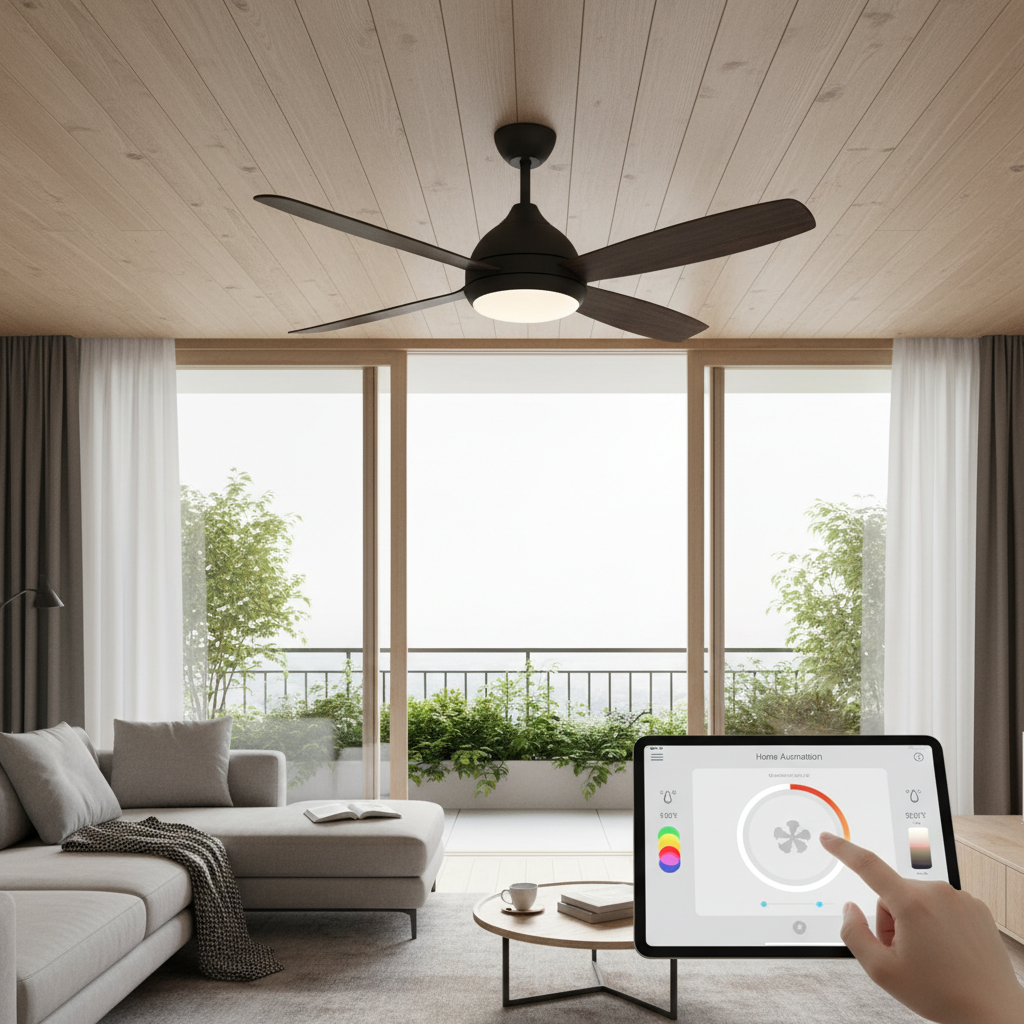
This comprehensive guide delves into the world of smart ceiling fans, specifically those designed for seamless integration with Apple HomeKit. We’ll explore the essential features, review the top models leading the market, and provide practical advice on choosing, installing, and optimizing your smart fan to ensure maximum comfort and convenience in your connected home.
Understanding Smart Ceiling Fans and HomeKit Integration
A smart ceiling fan transcends the basic functionality of its traditional counterparts by incorporating connectivity, allowing for advanced control and automation. These fans typically connect to your home Wi-Fi network, enabling interaction via a dedicated smartphone app or, more importantly for Apple enthusiasts, directly through Apple HomeKit.
Apple HomeKit serves as the secure framework that allows users to control various smart home accessories using the Home app on their Apple devices or with voice commands to Siri. When a ceiling fan is HomeKit-enabled, it means it has been certified by Apple to communicate securely and reliably within this ecosystem. This integration unlocks a suite of benefits, including hands-free control, custom schedules, and the ability to link your fan with other smart devices in automated scenes. The evolution of ceiling fan technology, from simple pull chains to remote controls and now to voice-activated, app-controlled smart systems, highlights a continuous drive towards greater convenience and energy efficiency. Brands like Hunter Fan, a pioneer in the industry since 1886, have been at the forefront of this transition, offering reliable, quiet fans enhanced with smart technology.
Key Features to Look for in a HomeKit Ceiling Fan
When selecting a HomeKit ceiling fan, several features contribute to its overall performance, convenience, and aesthetic appeal. Understanding these aspects will help you make an informed decision tailored to your specific needs.
Control Options
The hallmark of a smart fan is its versatile control. HomeKit-enabled fans offer multiple ways to manage settings:
- Voice Control: Seamless integration with Siri allows you to adjust speed, turn the fan or light on/off, or even change direction with simple voice commands, making hands-free operation a reality.
- Home App and Manufacturer Apps: The Apple Home app acts as a central hub, providing a unified interface for all your HomeKit devices. Many smart fans also come with their own manufacturer apps (e.g., HunterSMART app, WAC Smart Fan app) that offer additional granular control and customization options.
- Physical Remote Control: Most smart fans still include a traditional handheld remote for quick, convenient adjustments without needing a phone or voice assistant.
|
Our Picks for the Best Ceiling fan in 2026
As an Amazon Associate I earn from qualifying purchases.
|
||
| Num | Product | Action |
|---|---|---|
| 1 | Ceiling Fans with Lights - 42 Inch Low Profile Ceiling Fan with Light and Remote, Reversible DC Motors, 3CCT Dimmable Timer Noiseless, Black Flush Mount Ceiling Fan for Bedroom/Living Room |

|
| 2 | Amico Ceiling Fans with Lights, 42 inch Low Profile Ceiling fan with Light and Remote Control, Flush Mount, Reversible, 3CCT, Dimmable, Noiseless, Black Ceiling Fan for Bedroom, Indoor/Outdoor Use |
|
| 3 | Fanbulous 52 Inch Ceiling Fans with Lights and Remote, Stepless Color Temperature Change & Dimmable 20W LED Ceiling Fan, 6 Speeds Reversible Quiet DC Motor for Bedroom, Living Room, Apartment, Black |
|
| 4 | Passky Ceiling Fans with Lights, 52 inch Sleek Ceiling Fan with Light and Remote Control, 3CCT, Dimmable, Reversible, Noiseless, Black Ceiling Fan for Bedroom, Living Room |
|
| 5 | Asyko 46" Low Profile Ceiling Fan with Light and Remote Control,Black Modern Flush Mount Ceiling Fan with Lights for Bedroom, Reversible, Dimmable, Noiseless |
|
| 6 | ZMISHIBO Ceiling Fans with Lights and Remote, 19.7'' Low Profile Ceiling Fan, 3000-6000K Dimmable Modern Flush Mount LED Fan Light, 6 Wind Speeds, Black Fandelier Ceiling Fans for Bedroom |
|
| 7 | ZMISHIBO 52 Inch Ceiling Fan with Light, App&Remote Control, Flush Mount Low Profile, Dimmable 20W LED Light, Quiet Reversible Motor for Bedroom, Living Room, Apartment, Black |
|
| 8 | addlon Ceiling Fans with Lights, 42 Inch Low Profile Ceiling Fan with Light and Remote Control, Flush Mount, Reversible, 3CCT, Dimmable, Quiet, Black Small Ceiling Fan for Bedroom Indoor/Outdoor Use |
|
| 9 | Ceiling Fans with Lights, 42 Inch Ceiling Fan with Light And Remote, 3CCT Flush Moun Low Profile Ceiling Fans, 6 Speed Noiseless LED Ceiling Fan, Black Ceilings Fan with Remote for Bedroom Living Room |
|
| 10 | Ceiling Fans with Lights, 52 Inch Modern Ceiling Fans with Lights and Remote Control, DC Reversible Motor, Noiseless, 3CCT, Ceiling Fan for Bedroom, Living Room, Apartment Indoor/Outdoor Use |
|
Integrated Lighting
Many HomeKit ceiling fans come equipped with integrated LED light kits, offering a two-in-one solution for air circulation and ambient illumination.
- Dimmable LEDs: Essential for setting the right mood, dimmable lights allow you to adjust brightness levels.
- Color Temperature Adjustment: Some fans offer the ability to shift between warm and cool white light, adapting to different times of day or activities.
- RGB Lighting: Premium models, like the Dreo Smart RGB, feature ambient RGB light rings, providing a spectrum of colors to truly customize your room’s atmosphere.
Motor Type: AC vs. DC
The motor type significantly impacts a fan’s energy efficiency, noise level, and performance.
- DC (Direct Current) Motors: These are generally more energy-efficient, consuming up to 70% less power than AC motors. DC fans are also notably quieter, making them ideal for bedrooms and quiet living spaces. They typically offer more speed settings and a faster response to commands. While often having a higher upfront cost, their lower operating expenses can lead to long-term savings.
- AC (Alternating Current) Motors: Traditional and reliable, AC motors are typically found in more budget-friendly fans. They use alternating current directly from your home’s power supply and offer fewer speed options compared to DC motors. While less efficient, they still provide effective cooling and are often a solid choice for those prioritizing initial cost.
Design and Mounting
Smart ceiling fans come in a variety of designs and mounting styles to complement any interior.
- Mounting Options: Choose from flush mount (hugger) designs for low ceilings, standard downrod mounts for average ceiling heights, or extended downrods for high or sloped ceilings.
- Aesthetic Styles: From sleek, modern designs with clean lines (e.g., Modern Forms Wynd) to more traditional looks, there’s a style to match every home decor. Materials like wood, metal, and ABS plastic also contribute to the fan’s overall appearance.
Advanced Functions
Beyond basic on/off and speed control, smart fans offer intelligent features that enhance comfort and convenience:
- Reverse Function: Allows the fan to operate clockwise during cooler months, gently pushing warm air down from the ceiling to help circulate heat and improve energy efficiency.
- Schedules and Automations: Integrate your fan into HomeKit automations to turn on or off based on time of day, temperature, motion detection, or when you leave or arrive home. This truly optimizes energy usage and comfort.
Top Smart Ceiling Fans for HomeKit in 2026
The market for HomeKit-compatible smart ceiling fans is robust, with several brands offering excellent options. Here are some of the top contenders for 2026, combining performance, design, and seamless HomeKit integration:
-
Hunter Aerodyne Smart Ceiling Fan: A popular choice for its balance of modern design and robust HomeKit functionality. It’s known for strong airflow, four adjustable speeds, and easy integration with the Home app, making it suitable for larger rooms. Hunter fans are consistently praised for their proven reliability and quality engineering.
-
WAC Lighting Odyssey Smart Ceiling Fan: This fan is an excellent option for low ceilings, featuring a flush mount design that provides premium performance without taking up excessive vertical space. It boasts an integrated dimmable LED light with high color rendering, a 6-speed DC motor for superior efficiency and quiet operation, and full smart control via the WAC Smart Fan app and HomeKit.
-
Minka Aire Dyno XL Smart Ceiling Fan: Often highlighted as a top overall pick, the Dyno XL combines powerful airflow with a sleek, contemporary design. Minka Aire fans are generally known for their quality construction and range of modern styles, with many models offering HomeKit compatibility for comprehensive smart home control.
-
Modern Forms Wynd Smart Ceiling Fan: For those seeking a premium design and advanced features, the Modern Forms Wynd is a standout. It’s a powerful yet quiet fan that integrates with multiple smart home platforms, including HomeKit. Its sophisticated aesthetics and high-performance DC motor make it a luxury option for contemporary spaces.
-
Big Ass Fans Haiku L: Considered an ultimate premium choice, the Haiku L is renowned for its exceptional airflow, quiet operation, and minimalist design. While at the higher end of the price spectrum, its superior build quality, energy efficiency, and seamless HomeKit integration justify the investment for discerning users.
“The true magic of a HomeKit ceiling fan isn’t just turning it on with your voice; it’s how it silently integrates into your daily routines, creating comfort without conscious effort.” – John Alexander, CEO, Hunter Fan Company.
Choosing the Right HomeKit Ceiling Fan for Your Space
Selecting the perfect smart ceiling fan involves more than just HomeKit compatibility; it requires considering the specifics of your room and personal preferences.
Room Size and Fan Dimensions
The size of your room dictates the appropriate blade span for effective air circulation.
- Small Rooms (up to 75 sq ft): 29-36 inch blade span.
- Medium Rooms (76-144 sq ft): 36-48 inch blade span.
- Large Rooms (144-225 sq ft): 50-54 inch blade span.
- Great Rooms (over 225 sq ft): 56 inches or larger blade span, or multiple fans.
Additionally, consider ceiling height. Blades should ideally be at least 7 feet from the floor for safety and optimal performance. For ceilings below 8 feet, a flush mount or hugger fan is often necessary.
Aesthetic and Style
Your ceiling fan should complement your home’s decor. Smart fans are available in various finishes (matte black, brushed nickel, white, bronze) and blade materials (wood, metal, ABS plastic) to match modern, traditional, industrial, or minimalist interiors. Think about how the fan will integrate with your existing fixtures and furniture.
Budget and Value
While smart ceiling fans often come at a premium compared to traditional models, their energy efficiency and added convenience can provide long-term value. DC motor fans, though pricier upfront, can significantly reduce energy bills. Consider your budget range and weigh the initial cost against the benefits of smart features and energy savings.
Installation and Making Your Existing Fan Smart
Installing a new HomeKit ceiling fan or converting an existing one to be smart involves a few key steps and considerations.
Professional vs. DIY Installation
Installing a ceiling fan involves electrical wiring and securing a heavy fixture, which can be challenging for those unfamiliar with electrical work.
- Safety First: Always turn off power at both the wall switch and the circuit breaker before beginning any installation.
- DIY Installation: If you are comfortable with basic electrical wiring and can safely handle the weight of the fan, many manufacturers provide detailed instructional videos and guides. Ensure proper wiring for ground, line, and load connections.
- Professional Installation: For peace of mind and to ensure compliance with electrical codes, hiring a certified electrician is always recommended, especially for complex installations or if you are unsure about any steps.
Direct HomeKit Integration
Fans with built-in HomeKit support are generally straightforward to set up. You typically scan a HomeKit code on the fan or its packaging using the Home app on your iPhone or iPad, then follow the on-screen prompts to assign it to a room and configure its settings. This direct integration ensures seamless control and reliable performance within the Apple ecosystem.
Retrofitting Existing Fans
If you love your current ceiling fan but want to add HomeKit capabilities, there are several retrofit options:
- Lutron Caseta Wireless Fan Speed Control: This smart wall switch replaces your existing fan switch, providing HomeKit control over fan speed and on/off functions for AC fans. It integrates seamlessly with the Lutron Caseta ecosystem and HomeKit, though it typically doesn’t offer control over fan direction.
- Bond Bridge with Homebridge: For fans that use a remote control, a Bond Bridge can learn the remote’s signals. By integrating the Bond Bridge with Homebridge (a software bridge that brings non-HomeKit devices into HomeKit), you can add HomeKit control to almost any remote-controlled ceiling fan, whether AC or DC. This method requires a bit more technical setup but offers broad compatibility.
- In-Fan Controllers: Devices like the Sonoff IFAN04 can be wired directly into the fan canopy to provide smart control over fan speed and integrated lights. This option is more hands-on and typically requires flashing custom firmware (like HAA) or using Homebridge for HomeKit compatibility.
Conclusion
The landscape of smart ceiling fans for HomeKit in 2026 offers an impressive array of choices that blend intelligent control with superior comfort and stylish design. From the energy-efficient quietness of DC motors to the vibrant possibilities of integrated RGB lighting, these devices go beyond simple air circulation, becoming integral components of a truly smart home. By prioritizing features like robust HomeKit integration, appropriate sizing for your space, and thoughtful design, you can select a fan that not only enhances your comfort but also complements your lifestyle and reduces energy consumption. Whether you opt for a new, purpose-built HomeKit fan or retrofit an existing one, the convenience of controlling your fan with Siri or a tap on your iPhone truly transforms the way you experience your living environment.
Ready to bring smart comfort to your home? Which HomeKit-compatible fan features are most important to you?
Frequently Asked Questions
What makes a ceiling fan “smart” and HomeKit compatible?
A “smart” ceiling fan connects to your home network (usually Wi-Fi) for remote control via an app or voice assistant. HomeKit compatibility means it’s certified by Apple to integrate with the Home app and Siri, allowing for secure control, automations, and scene creation within the Apple ecosystem.
Are HomeKit ceiling fans energy efficient?
Many HomeKit ceiling fans, especially those with DC motors and integrated LED lighting, are highly energy-efficient. DC motors can reduce energy consumption by up to 70% compared to traditional AC motors, and LEDs are far more efficient than incandescent bulbs.
Can I control the fan and light separately with HomeKit?
Yes, most HomeKit-enabled ceiling fans with integrated lights allow for independent control of the fan speed and the light (on/off, dimming, and sometimes color temperature or RGB changes) through the Home app or Siri.
What if my existing fan isn’t HomeKit compatible? Can I make it smart?
Yes, you can often retrofit an existing fan. Options include replacing your wall switch with a HomeKit-compatible smart fan speed controller (like Lutron Caseta) for AC fans, or using a smart bridge (like Bond Bridge with Homebridge) to control remote-operated fans.
Do HomeKit ceiling fans require a hub?
Most HomeKit accessories, including ceiling fans, can connect directly to your home Wi-Fi. However, for remote access (controlling your fan when you’re away from home) and advanced automations, a HomeKit hub (such as an Apple TV, HomePod, or iPad set as a hub) is required.
How do I choose the correct fan size for my room?
Measure your room’s square footage. For rooms up to 75 sq ft, a 29-36 inch fan is suitable; for 76-144 sq ft, 36-48 inches; for 144-225 sq ft, 50-54 inches. For larger rooms, consider fans 56 inches or larger, or install multiple fans. Ensure at least 7 feet of clearance from the floor to the blades.