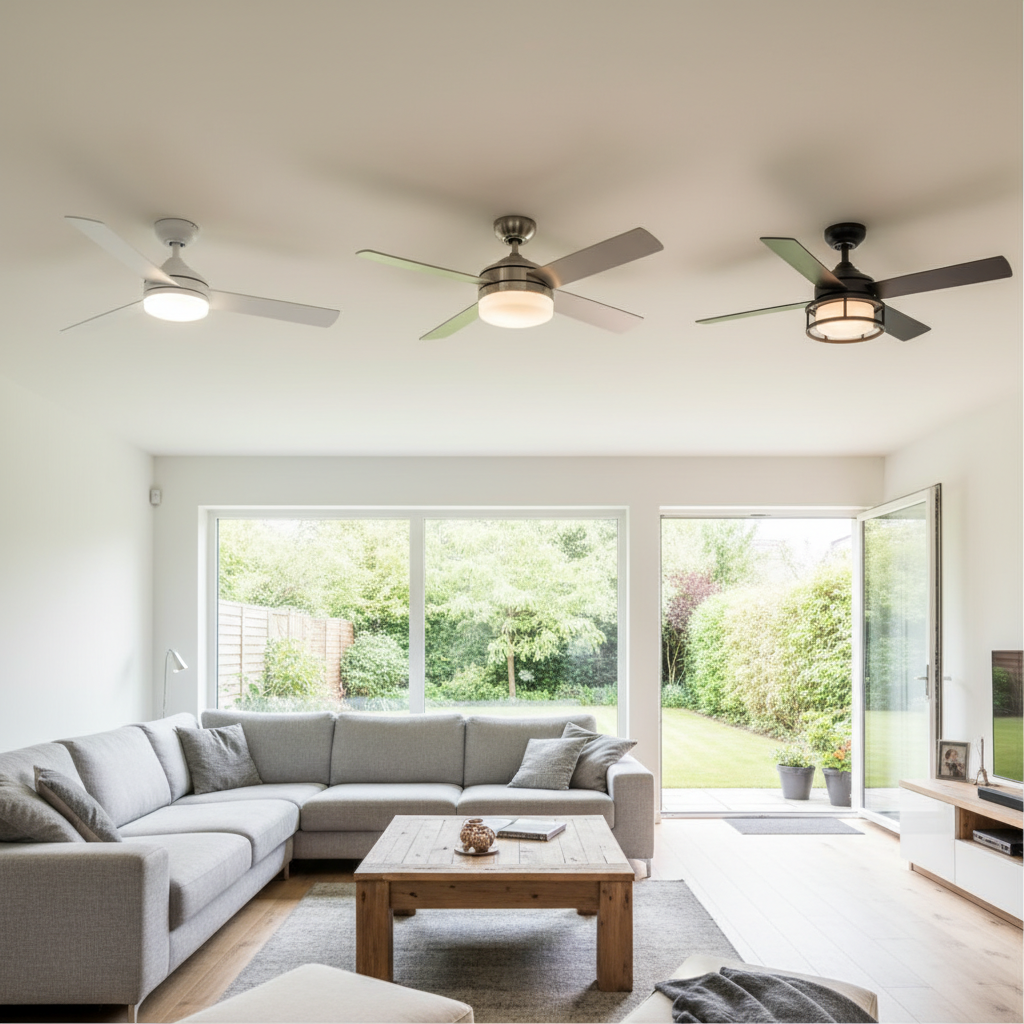
High ceilings add a touch of grandeur to any home, but they often come with a hidden challenge: cleaning those out-of-reach ceiling fans. Dust and grime can accumulate quickly, circulating allergens and reducing the fan’s efficiency. The thought of balancing on a wobbly ladder can be daunting, even dangerous. Fortunately, you don’t need to be an acrobat or a professional cleaner to keep your high ceiling fans spotless. With the right tools and techniques, you can achieve sparkling clean blades safely and effectively, all while keeping your feet firmly on the ground.
What Are Ceiling Fans? An Overview of the Market
Ceiling fans are essential fixtures designed to circulate air and provide a comfortable environment, either by creating a cooling breeze in warm weather or distributing warm air during colder months. They consist of a motor, blades, and a mounting system, installed on the ceiling of a room. Over the years, ceiling fan technology has evolved significantly, moving from basic functional models to sophisticated smart versions that integrate with home automation systems.
The market offers a diverse range of ceiling fans, catering to various aesthetic preferences and functional needs. Key brands worldwide, including Hunter, Casablanca, and Fanimation, are known for their innovation and quality. In many regions, local manufacturers and distributors also offer a wide selection of designs and features, making it easier for consumers to find a fan that perfectly complements their space and budget. The continuous development of energy-efficient motors and smart controls underscores the industry’s commitment to enhancing user experience and environmental responsibility.
Categorizing Ceiling Fans by Function and Design
Ceiling fans come in a myriad of styles and functionalities, each designed to meet specific needs and aesthetic preferences. Understanding these classifications can help you appreciate the diversity of options available.
Ceiling Fans with Lights: Advantages, Disadvantages, and Choices
Ceiling fans with integrated lighting are a popular choice, combining two essential room fixtures into one.
- Advantages: They offer dual functionality, saving space and simplifying installation by requiring only one electrical connection point. They come in various lighting styles, from subtle LED strips to elaborate chandelier-style fixtures, serving both ambient and task lighting needs.
- Disadvantages: If the light fixture breaks, the entire unit might need professional attention. The light output might also be limited compared to dedicated lighting solutions.
- Choices: When selecting, consider the room’s overall lighting requirements, the light’s dimming capabilities, and the ease of replacing bulbs (if applicable). Many modern fans feature integrated LED lighting for energy efficiency and longevity.
|
Our Picks for the Best Ceiling fan in 2026
As an Amazon Associate I earn from qualifying purchases.
|
||
| Num | Product | Action |
|---|---|---|
| 1 | Ceiling Fans with Lights - 42 Inch Low Profile Ceiling Fan with Light and Remote, Reversible DC Motors, 3CCT Dimmable Timer Noiseless, Black Flush Mount Ceiling Fan for Bedroom/Living Room |

|
| 2 | Asyko 46" Low Profile Ceiling Fan with Light and Remote Control,Black Modern Flush Mount Ceiling Fan with Lights for Bedroom, Reversible, Dimmable, Noiseless |
|
| 3 | ZMISHIBO Ceiling Fans with Lights and Remote, 19.7'' Low Profile Ceiling Fan, 3000-6000K Dimmable Modern Flush Mount LED Fan Light, 6 Wind Speeds, Black Fandelier Ceiling Fans for Bedroom |
|
| 4 | Passky Ceiling Fans with Lights, 52 inch Sleek Ceiling Fan with Light and Remote Control, 3CCT, Dimmable, Reversible, Noiseless, Black Ceiling Fan for Bedroom, Living Room |
|
| 5 | ZMISHIBO 52 Inch Ceiling Fan with Light, App&Remote Control, Flush Mount Low Profile, Dimmable 20W LED Light, Quiet Reversible Motor for Bedroom, Living Room, Apartment, Black |
|
| 6 | Amico Ceiling Fans with Lights, 42 inch Low Profile Ceiling fan with Light and Remote Control, Flush Mount, Reversible, 3CCT, Dimmable, Noiseless, Black Ceiling Fan for Bedroom, Indoor/Outdoor Use |
|
| 7 | Ceiling Fans with Lights, 42 Inch Ceiling Fan with Light And Remote, 3CCT Flush Moun Low Profile Ceiling Fans, 6 Speed Noiseless LED Ceiling Fan, Black Ceilings Fan with Remote for Bedroom Living Room |
|
| 8 | Fanbulous 52 Inch Ceiling Fans with Lights and Remote, Stepless Color Temperature Change & Dimmable 20W LED Ceiling Fan, 6 Speeds Reversible Quiet DC Motor for Bedroom, Living Room, Apartment, Black |
|
| 9 | addlon Ceiling Fans with Lights, 42 Inch Low Profile Ceiling Fan with Light and Remote Control, Flush Mount, Reversible, 3CCT, Dimmable, Quiet, Black Small Ceiling Fan for Bedroom Indoor/Outdoor Use |
|
| 10 | Ceiling Fans with Lights, 52 Inch Modern Ceiling Fans with Lights and Remote Control, DC Reversible Motor, Noiseless, 3CCT, Ceiling Fan for Bedroom, Living Room, Apartment Indoor/Outdoor Use |
|
Ceiling Fans Without Lights: Advantages, Disadvantages, and Choices
For those who prefer separate lighting or already have ample illumination, light-less ceiling fans are an excellent option.
- Advantages: They often have a cleaner, more minimalist look, making them ideal for modern or industrial designs. Without a light kit, these fans can sometimes be less expensive and simpler to install. They are also a good choice if you want to avoid adding extra light to a space that is already well-lit.
- Disadvantages: You’ll need to ensure your room has alternative lighting sources.
- Choices: Focus on blade design, motor efficiency, and overall aesthetic when choosing a fan without lights. They come in various sizes and finishes to match any decor.
Decorative Ceiling Fans: Styles, Materials, and Suitable Spaces
Decorative ceiling fans prioritize aesthetics, often featuring unique designs, luxurious materials, and intricate details to enhance a room’s decor.
- Styles: These can range from rustic and traditional with wooden blades and ornate housings, to sleek and contemporary with brushed metal finishes and streamlined designs. There are also themed fans, such as those with tropical leaf blades or industrial metal cages.
- Materials: Common materials include solid wood, carved resin, brushed nickel, bronze, and polished chrome. Blades might be made of natural wood, composite materials, or even metal.
- Suitable Spaces: Decorative fans are perfect for living rooms, master bedrooms, dining areas, or any space where the fan is intended to be a prominent design element.
Industrial Ceiling Fans: Characteristics, Applications, and Purchase Considerations
Industrial ceiling fans are built for performance and durability in larger, more demanding environments.
- Characteristics: They typically feature robust metal blades, powerful motors, and larger diameters to move substantial volumes of air. Their design is often utilitarian, focusing on function over ornate aesthetics.
- Applications: Commonly found in warehouses, workshops, large commercial spaces, gyms, and agricultural settings where efficient air circulation is critical.
- Considerations: When purchasing, prioritize air delivery (CFM), motor strength, durability, and safety features. Noise level might also be a factor in some commercial applications.
Comparing Popular Ceiling Fan Types
Here’s a brief comparison of common ceiling fan types based on key attributes:
| Feature | Ceiling Fan with Lights | Ceiling Fan without Lights | Decorative Ceiling Fan | Industrial Ceiling Fan |
|---|---|---|---|---|
| Price Range | Mid to High | Low to Mid | Mid to High (can be very high) | Mid to High |
| Primary Use | Air circulation & general illumination | Air circulation | Air circulation & aesthetic enhancement | High-volume air circulation |
| Aesthetics | Integrated with various light styles | Clean, minimalist | Focus on design, materials, unique looks | Utilitarian, robust |
| Installation | Single electrical point | Single electrical point | Single electrical point | Often requires specialized installation |
| Maintenance | Bulb replacement, general cleaning | General cleaning | General cleaning, care for delicate parts | Durable, minimal specialized care |
| Best For | Living rooms, bedrooms, multi-functional spaces | Rooms with existing ample lighting | Living rooms, dining rooms, aesthetic-focused spaces | Warehouses, workshops, large commercial areas |
Guide to Choosing the Right Ceiling Fan
Selecting the perfect ceiling fan involves more than just picking a design you like. It requires considering your specific needs and the unique characteristics of your space.
Determining Usage Needs: Room Size and Purpose
The first step is to assess the room’s size and the fan’s primary purpose.
- Room Size: A fan too small won’t move enough air, while one too large can overpower the space. Measure your room’s dimensions to determine the appropriate fan size.
- Purpose: Are you looking for a gentle breeze in a bedroom, powerful air movement in a living room, or a statement piece for a dining area? This will influence the fan’s features and design.
Selecting the Right Fan Size: Reference Chart
Fan size, measured by blade span, is crucial for effective air circulation. Here’s a general guide:
| Room Size (Square Feet) | Blade Span (Inches) |
|---|---|
| Up to 75 | 29-36 |
| 76-144 | 36-44 |
| 145-225 | 44-52 |
| 226-400 | 52-60 |
| Over 400 | 60-72+ |
Ensure there’s at least 18-24 inches of clearance from walls and other obstructions for optimal airflow.
Choosing the Fan Motor: AC vs. DC, Pros and Cons
The motor is the heart of your ceiling fan, affecting performance and energy consumption.
- AC (Alternating Current) Motors: These are traditional, widely available, and generally more affordable. They are reliable but can be less energy-efficient and sometimes noisier than DC motors.
- DC (Direct Current) Motors: Modern DC motors are highly energy-efficient, consuming up to 70% less power than AC motors. They are typically quieter, offer more speed options, and often come with remote controls. However, they tend to be more expensive upfront.
Consider your budget, energy efficiency goals, and desired features when choosing between AC and DC.
Selecting Blade Material: Wood, Metal, Plastic
Blade material impacts both the fan’s aesthetics and its performance.
- Wood Blades: Offer a classic, warm look. Can be solid wood, plywood, or MDF. Good for traditional and rustic decors.
- Metal Blades: Durable and often used in industrial or modern designs. Can be more efficient at moving air but might be heavier and potentially noisier.
- Plastic Blades (ABS): Lightweight, durable, and resistant to moisture, making them suitable for outdoor or humid environments. Available in various finishes to mimic other materials.
Important Features to Consider: Remote Control, Timer, Reversible Function
Modern ceiling fans offer a range of features that enhance convenience and functionality.
- Remote Control: Allows you to adjust fan speed, light settings, and direction from anywhere in the room, eliminating the need to pull chains.
- Timer Function: Useful for automatically turning the fan off after a set period, great for bedrooms.
- Reversible Function: Changes the direction of blade rotation. Clockwise rotation pushes warm air down in winter, while counter-clockwise creates a cooling breeze in summer.
- Smart Home Integration: Some fans can connect to smart home systems, allowing control via voice commands or smartphone apps.
Top High-Ceiling Fans Without a Ladder: Cleaning Solutions
Cleaning high ceiling fans can seem like a daunting task, but with the right tools, it’s safer and easier than you think. You can effectively remove dust and grime without the need for a ladder, ensuring your fan runs efficiently and your air remains clean.
The Power of Extendable Dusters
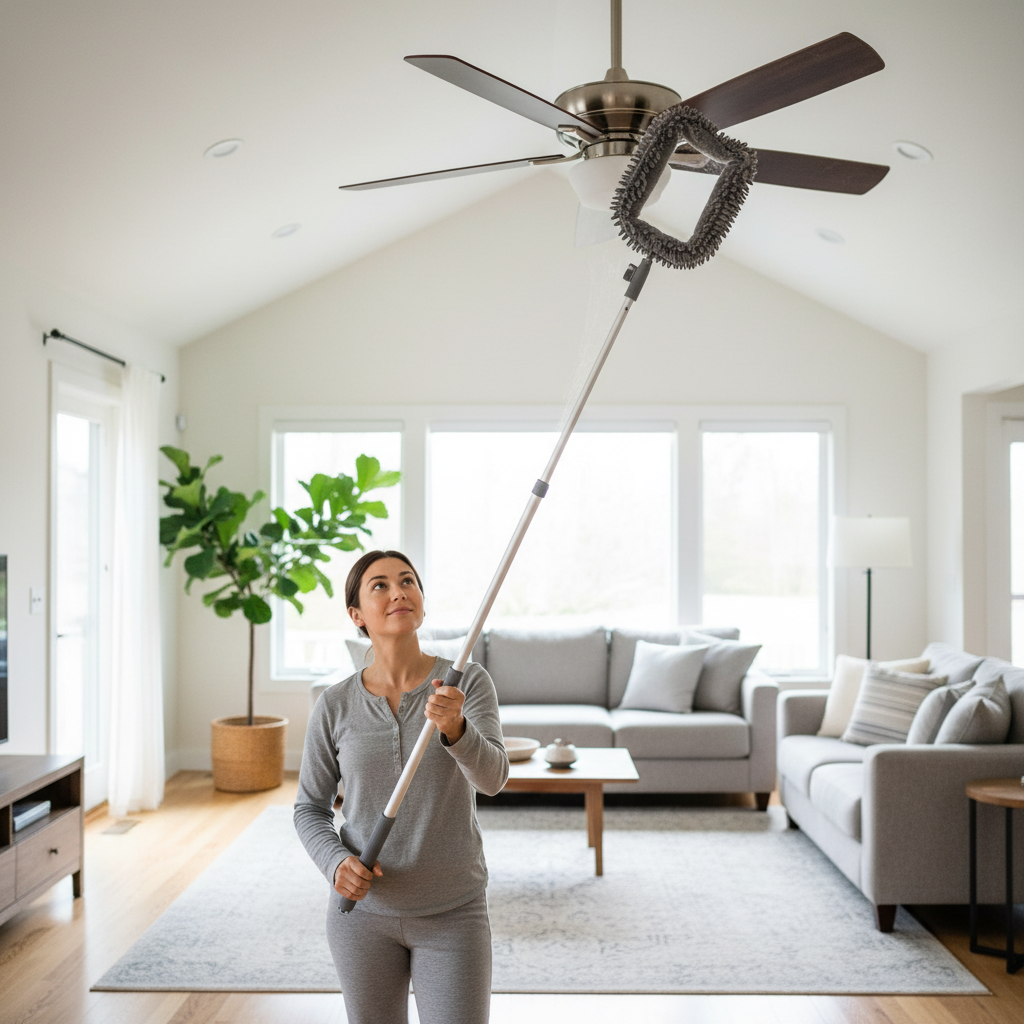
Extendable dusters are your best friend when it comes to high-reach cleaning. These tools come with long poles that can extend several feet, allowing you to reach even the highest fan blades.
- Microfiber Dusters: These are highly effective at trapping dust and allergens with their electrostatic properties. Many come with flexible heads that can bend to conform to the shape of the fan blades, cleaning both the top and bottom simultaneously.
- Electrostatic Dusters: Similar to microfiber, these dusters use static electricity to attract and hold dust, preventing it from scattering into the air.
- Lambswool Dusters: These natural wool dusters are excellent for picking up fine dust and are gentle on surfaces.
Look for dusters with a “C-shape” or a flexible head that can wrap around the blade for a thorough clean. Brands like Unger and Extend-A-Reach offer specialized ceiling fan dusters designed for this purpose.
“Using an extendable duster with a flexible head is a game-changer for high ceiling fans. It not only keeps you safe on the ground but also ensures you get a comprehensive clean on all surfaces of the blades.” – Sarah Jenkins, Professional Cleaning Consultant
The Handy Pillowcase Method
This simple, yet ingenious, DIY method is excellent for containing dust and preventing it from falling onto your furniture and floors.
- Preparation: Ensure the fan is completely off and motionless. Grab an old pillowcase.
- Execution: Carefully slip the pillowcase over one fan blade, covering its entire length.
- Wipe and Contain: Press the pillowcase against the blade and slowly pull it off, allowing the dust to fall directly into the pillowcase.
- Repeat: Rotate the fan (manually or by briefly turning it on and off) to access the next blade and repeat the process. Empty the pillowcase as needed.
This method is particularly effective for heavy dust buildup, minimizing cleanup afterward.
Using a Static-Cling Dust Cloth on a Pole
If you don’t have a specialized duster, you can improvise with common household items.
- Attach: Secure a static-cling dust cloth (like a Swiffer Duster pad) to the end of a broom handle or a long mop handle. You can use rubber bands or tape to keep it firmly in place.
- Wipe: Gently wipe the fan blades, allowing the static charge to attract the dust.
- Replace: Replace the dust cloth as it becomes saturated with dust.
This method is quick and convenient for lighter dusting.
Advanced Cleaning with a Vacuum Cleaner Attachment
For fans with more stubborn dust or cobwebs, a vacuum cleaner with an extendable hose or a long-crevice attachment can be effective.
- Attachment: Connect a long, narrow attachment or a brush tool to your vacuum hose.
- Suction: Carefully maneuver the attachment to vacuum dust directly from the fan blades and housing.
- Caution: Be gentle to avoid scratching the fan’s finish or bending the blades. This method works best if your vacuum has good suction and a long enough reach.
Cleaning Solutions for Stubborn Grime
For sticky grime or heavy buildup that dusters can’t tackle, a cleaning solution might be necessary.
- Mild Soap and Water: Mix a small amount of mild dish soap with warm water. Dampen a microfiber cloth (attached to your extendable pole) with the solution (do not saturate it) and gently wipe the blades. Follow with a clean, damp cloth to remove any soap residue, then dry with another clean cloth.
- Vinegar Solution: A mixture of equal parts white vinegar and warm water in a spray bottle can also be effective. Lightly spray the solution onto a clean microfiber cloth, then wipe the blades. Vinegar helps break down grime and leaves a streak-free finish.
Always ensure the fan is completely dry before turning it back on.
Guide to Installing and Maintaining Ceiling Fans
Proper installation and regular maintenance are key to a ceiling fan’s longevity and efficient operation. While installation of high ceiling fans often requires professional help, particularly if wiring is involved or if specific structural supports are needed, understanding the basics of both processes is beneficial.
Safe and Correct Ceiling Fan Installation Steps
For high ceiling fans, professional installation is highly recommended to ensure safety and proper function. However, here are general steps involved:
- Turn Off Power: Always switch off power to the fan’s circuit at the breaker box.
- Mounting Bracket: Securely attach the mounting bracket to a ceiling joist or a fan-rated electrical box. This is crucial for stability, especially for heavier fans.
- Assemble Fan: Assemble the fan motor, downrod, and housing on the ground.
- Wiring: Connect the fan’s electrical wires to the house wiring, following color codes (typically black to black, white to white, ground to ground).
- Hang Fan: Carefully lift and hang the fan motor assembly onto the mounting bracket.
- Attach Blades: Securely attach the fan blades to the motor housing.
- Test: Restore power and test the fan’s operation, including all speeds and light functions.
Always consult the manufacturer’s instructions and local electrical codes. When dealing with high ceilings, specialized extension poles and safety harnesses might be needed, reinforcing the need for professional assistance.
Cleaning and Maintaining Your Ceiling Fan for Longevity
Regular cleaning and basic maintenance can significantly extend your ceiling fan’s lifespan and maintain its performance.
- Regular Dusting: Dust your fan blades every few weeks, or at least monthly, using an extendable duster to prevent heavy buildup.
- Deep Cleaning: Every few months, or seasonally, perform a deeper clean using the pillowcase method or a damp microfiber cloth with a mild cleaning solution to remove sticky grime.
- Check for Wobble: If your fan wobbles, turn it off and check that all blade screws are tightened. Blade balancing kits are available if wobbling persists.
- Lubrication: Some older fan models may require motor lubrication. Consult your owner’s manual. Modern sealed-bearing motors typically do not need lubrication.
- Seasonal Use: If you use your ceiling fan year-round, clean it every other month. If used seasonally, clean it at the beginning and end of the season. This prevents dust and allergens from circulating in your home.
Common Problems and Troubleshooting Tips
- Fan Doesn’t Turn On: Check the circuit breaker, wall switch, and remote control batteries. Ensure all wire connections are secure.
- Fan Wobbles: Ensure blades are clean and free of excessive dust. Check that all blade screws and the mounting bracket are tight. Use a blade balancing kit.
- Noisy Fan: Tighten all screws. Check if blades are bent or damaged. Lubricate motor if applicable (for older models).
- Light Not Working: Check the light bulb, ensure it’s tightly screwed in or replace it. Check any light-related wiring connections.
For persistent issues, especially with high-ceiling fans, it’s always best to consult a qualified electrician or a fan repair specialist.
Frequently Asked Questions
Can I really clean a high ceiling fan without a ladder?
Yes, absolutely! You can effectively clean high ceiling fans using various tools like extendable microfiber dusters, the pillowcase method, or by attaching static-cling cloths to a long pole. These methods allow you to reach and clean the blades safely from the ground.
What is the best tool for cleaning high ceiling fans?
Extendable dusters, especially those with flexible or C-shaped microfiber or electrostatic heads, are often considered the best tools. They can bend to conform to the fan blades, cleaning both top and bottom surfaces simultaneously while effectively trapping dust.
How often should I clean my high ceiling fan?
For ceiling fans used year-round, it’s recommended to clean them every other month. If you only use your fan seasonally, aim to clean it at the beginning and end of the season to prevent dust and allergens from accumulating and circulating.
Is the pillowcase method effective for dusty ceiling fans?
The pillowcase method is highly effective for dusty ceiling fans because it encapsulates the entire blade, trapping dust inside the pillowcase as you slide it off. This significantly reduces the amount of dust that falls onto your floor and furniture.
What if my ceiling fan has sticky grime instead of just dust?
For sticky grime, you can dampen an extendable microfiber cloth with a mild cleaning solution (like warm water and a little dish soap, or equal parts water and white vinegar). Gently wipe the blades with the damp cloth, then follow up with a clean, dry cloth to remove any residue. Ensure the fan is completely off and dry before use.
Are there any safety precautions I should take when cleaning a high ceiling fan without a ladder?
Always turn off the ceiling fan completely at the wall switch (and preferably the circuit breaker) before you begin cleaning to prevent accidental activation. Ensure you have a clear workspace below the fan and proceed gently to avoid dislodging the fan or causing any damage.